
Hey, welcome to Alternatievemiddelen.nl by Tom & Melanie

Fast delivery

Free delivery on orders of €75 or more (NL) and €100 or more (in BE and DE)

Collection available

Home

>>

The Library

>>

Frequently Asked Questions: AquaPure Pesticide Cleaner

Frequently Asked Questions: AquaPure Pesticide Cleaner

On this page, we answer frequently asked questions about the use, operation, maintenance and test results of the AquaPure pesticide cleaner.

The answers are based on the manufacturer’s manual and product specifications, available laboratory results, scientific literature and our own experience with the AquaPure. Where necessary, we distinguish between information provided by the manufacturer, independent research and our practical experience.

Usage

Yes, you can follow the same instructions for suitable types of fruit and vegetables. You can also wash organically grown produce to remove dirt and other contaminants.

No. Ordinary table salt is fine. You only need a small amount – about 1/8 of a teaspoon, according to the instructions.

No. The AquaPure is a supplementary treatment. After use, you should always rinse fruit and vegetables under clean, running tap water.

If fruit or vegetables float, not the entire surface is in constant contact with the treated water. You can easily solve this by placing a plate or chopping board on top of your fruit and vegetables whilst the AquaPure is running. This keeps the fruit and vegetables submerged, ensuring a more thorough clean.

This ensures that the surface comes into better contact with the electrolyzed water. This does not mean that all pesticide residues are removed. Always rinse the fruit and vegetables under the tap afterwards.

Do not use the AquaPure as a substitute for normal cleaning of a plate or chopping board.

Electrolysed water has been the subject of research for many years and is used, amongst other things, in the food industry under controlled conditions (1, 2, 3, 4). When water is electrolysed with salt, substances such as hypochlorous acid and hypochlorite may be produced. These substances can break down certain contaminants.

To ensure the AquaPure is used safely, it is important to follow the instructions for use. Use the recommended amount of salt, do not drink the treated water, and always rinse fruit and vegetables thoroughly under clean tap water afterwards.

During treatment, you may notice a faint smell of chlorine. This is due to the electrolysis process. Please only use the device in accordance with the instructions.

Yes, pesticides can also end up in the skin and flesh of fruit. Some pesticides remain mainly on the outside, whilst others penetrate the skin or are absorbed by the plant itself. The latter applies, for example, to systemic pesticides.

Washing with water, bicarbonate of soda or electrolyzed water can reduce certain residues on the surface. However, this does not always remove substances that are embedded deeper within the product.

How effective a treatment is depends on the pesticide, the type of fruit or vegetable, and the method used.

In our article on Helder we explain in more detail what scientific research has shown on this subject.

We recommend using fresh water for each new batch of fruit or vegetables. During the washing process, dirt and other substances from the surface may end up in the water. By changing the water, you can avoid washing new produce in water that has already been used.

The number of cleaning cycles depends on the amount of water:

  • 1 to 3 litres of water: 1 cycle
  • 4 to 6 litres of water: 2 cycles
  • 7 litres of water or more: 3 cycles

One cycle lasts 5 minutes. After the final cycle, leave the fruit and vegetables to soak in the treated water for a further 5 minutes, then rinse everything thoroughly under running tap water.

The number of cycles is based on the AquaPure’s instructions for use. It does not guarantee that all pesticide residues will be removed.

Only a small amount of salt is needed to use the AquaPure. According to the instructions for use, approximately 1/8 teaspoon of salt (a pinch) is sufficient for a standard treatment.

The salt makes the water more conductive. In addition, chloride ions from the salt are used in the formation of oxidising agents during electrolysis.

You can just use table salt. We use it ourselves from time to time Celtic sea salt. You don’t need any special salt.

Do not add more salt than recommended. Adding more salt does not automatically mean that the AquaPure works better.

Use water at room temperature and give the salt a quick stir before starting the treatment.

We prefer to use a large glass bowl ourselves. Glass is easy to clean, hardly absorbs any odours, and allows you to see clearly what is happening during the treatment. IKEA sells a 28 cm glass bowl under the name TRYGG sold for just a few euros. It’s as if this dish were made for the AquaPure, because, as you can see, it fits perfectly on the base.

A suitable plastic container may also be used, provided it is intended for contact with food and is suitable for treatment in accordance with the instructions.

Ideally, choose a container in which the fruit and vegetables have plenty of space and are in contact with the water as much as possible. Stir gently a few times during the process, especially if some of the produce remains floating.

Once you’ve finished, rinse the fruit and vegetables under running tap water. Clean the bowl you’ve used as well.

We recommend using the AquaPure only for whole, suitable types of fruit and vegetables.

In the case of cut fruit and vegetables, the inside of the produce comes into direct contact with the electrolyzed water. There has been insufficient research into what this means for the absorption of the substances formed and for the quality of the food.

You should therefore not use the AquaPure on cut or dried fruit. Always rinse treated fruit and vegetables under clean tap water afterwards. Then drain them thoroughly and store them in accordance with standard hygiene guidelines.

We recommend that, at the very least, you include everything from the so-called Dirty Dozen wash in the appliance. These include strawberries, nectarines, apples, grapes, peppers, cherries, peaches, pears, celery and tomatoes. For fruit and vegetables in the Clean Fifteen Or, for organic produce, a thorough rinse under the tap is sufficient. There is no point in cleaning produce with a thick skin, such as bananas, oranges, kiwis, onions, mangoes, pineapples, melons or avocados. The appliance is only suitable for whole (leafy) vegetables and fruit. It is better to peel conventional potatoes; they do not need to be treated with the AquaPure. We recommend eating organic potatoes with their skins on. You can treat these, but it is not strictly necessary if you eat them with a brush Wash them thoroughly under the tap beforehand. Mushrooms can absorb moisture, so it is advisable not to treat them. Incidentally, mushrooms are on the ‘Clean Fifteen’ list, so it is not strictly necessary to wash them thoroughly.

The AquaPure is designed to give you many years of enjoyment. To extend its lifespan, it is important to bear a few things in mind. Here are 7 important tips for using the AquaPure and ensuring the appliance has a long lifespan:

  1. Usage not too much salt, just a pinch is enough!
  2. Dry the appliance thoroughly after use and, in particular, the charging contacts, to prevent corrosion on them.
  3. Usage water that isn’t too cold, it’s best if it’s at about room temperature.
  4. You’d be better off cleaning a large amount of fruit and vegetables in one go, then just 1 or 2 pieces of fruit or veg at a time. That way, you’ll save the battery.
  5. Turn on the AquaPure not to if he not in the water is.
  6. Never store the appliance away for long periods either with a flat battery, as this may damage the battery.
  7. Clean your AquaPure regularly; see also user guide.

It’s a shame your AquaPure isn’t working any more! Fortunately, there are a few steps you can try yourself to sort out the problem and get the appliance working again.

Step 1. Check the charging contacts

Is your AquaPure no longer charging properly? If so, there may be dirt or corrosion (rust-like deposits) on the charging contacts.

  • Dampen a piece of kitchen roll with (organic) vinegar and place it against the charging port. Leave it to work for about 30 minutes.
  • Next, carefully remove the dirt or corrosion using a sharp blade or other suitable object. Scrape only over the affected contact points and take care not to damage the surface.
  • Remove any vinegar residue and allow the contact points to dry completely.
  • Then reconnect the AquaPure to the charger.

Step 2. Fully charge the AquaPure

Connect the AquaPure to the charger and leave it to charge for approximately 5 hours. Check that the magnetic charging cable is properly connected to both the device and the power source.

Step 3. Perform a hard reset

Once the AquaPure is fully charged, you can perform a hard reset:

  • Hold down the on/off button for about 10 to 15 seconds held down until the device switches off.
  • Release the on/off button.
  • Please try switching the AquaPure back on.

Step 4. Check the power source and charging cable

Is the AquaPure still not switching on? If so, try a different power source or, if available, a different suitable charging cable.

A faulty cable or power source may prevent the device from charging properly.

Step 5. Check that the parts are securely fastened

It is also possible that some parts inside the AquaPure have come loose. You can check this as follows:

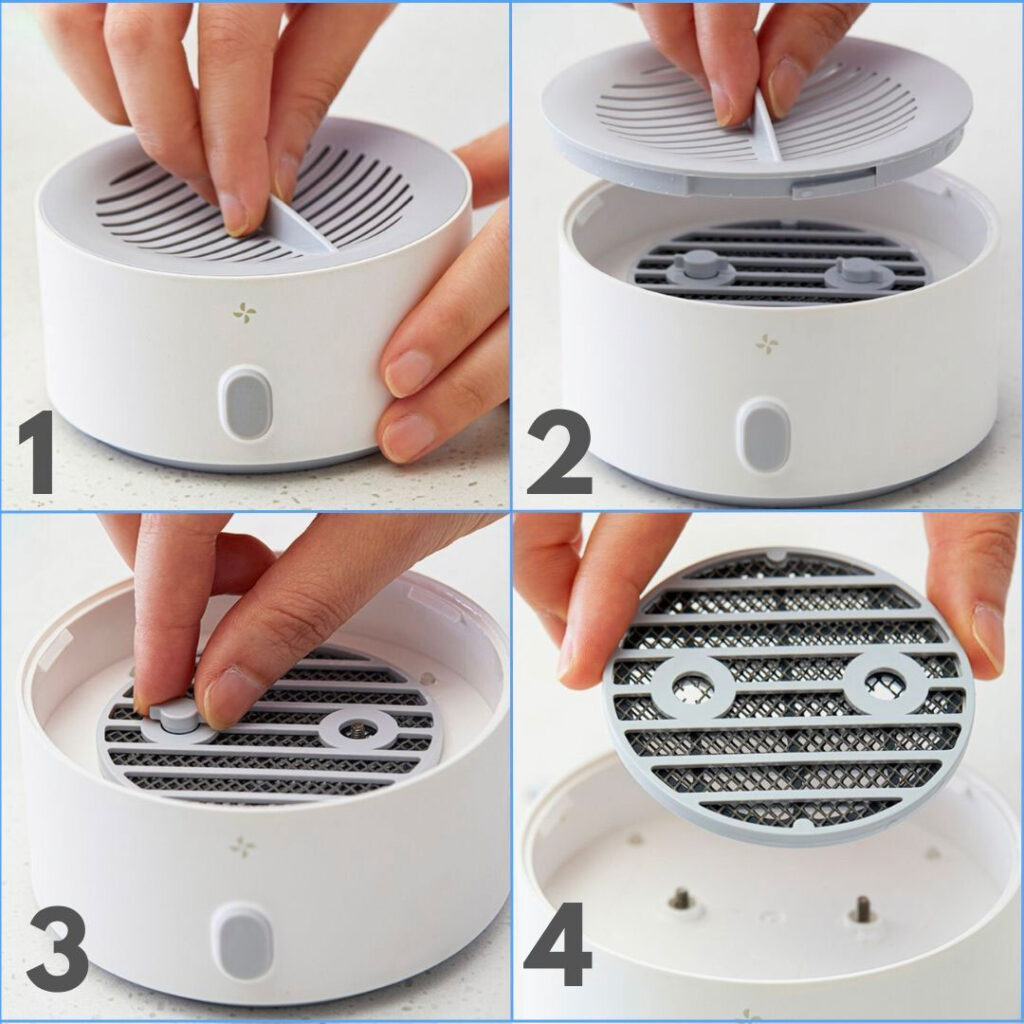
  1. Unscrew the top of the AquaPure. You will now see two screw-on caps (see the image below).
  2. Check that both screw knobs are securely fastened and, if necessary, tighten them gently.
  3. Also check that the small grid is properly in place. You’ll see two indentations on the grid and two corresponding raised areas on the appliance. This means the grid can only fit in one way.
  4. Screw the top back onto the appliance.
  5. Recharge the AquaPure for about 5 hours, and check whether the device is working again.
AquaPure Troubleshooting

Is your AquaPure still not working?

Have you tried all the steps above, but is the AquaPure still not working? If so, we’d be happy to help.

We would like to receive a short video showing exactly what happens when you try to use the AquaPure.

We would also appreciate it if you could send us a few photos of:

  • The underside of the device.
  • The side with the on/off button.
  • The side with the magnetic charging contact.

You can easily send us the video and photos via WhatsApp. Of course, you can also do it another way contact contact us.

We’d be happy to take a look with you to see how we can resolve the issue.

Over time, the AquaPure’s charging contacts may oxidise or corrode due to contact with water and oxygen. The combination of water and salt, in particular, can accelerate this process.

If corrosion develops on the contact points, the magnetic charging cable may not make a proper connection. As a result, the AquaPure may no longer charge.

How can you spot corrosion on the charging contacts?

If you plug in the charging cable but the red light no longer flashes, this may be due to corrosion on the contact points.

Check whether the contact points still have their original golden colour. If you can no longer see any golden colour on one or both contact points, but instead notice tarnish or discolouration, this may be a sign of corrosion.

How can you sort this out?

  1. Wipe the contact points with vinegar. Moisten a piece of kitchen roll with (organic) vinegar and place or stick it against the charging contacts so that the vinegar comes into full contact with the build-up. Leave it to work for about an hour. Make sure the device is not connected to the charger.
  2. Rinse the AquaPure. Remove the kitchen roll and rinse the appliance under the tap.
  3. Carefully remove the corrosion. Using a potato peeler, very carefully scrape the build-up off the contact points. Apply as little pressure as possible to avoid causing damage. Once the original golden colour becomes visible again, the contact points are usually clean enough.
  4. Dry the appliance thoroughly. Make sure, in particular, that the charging contacts are completely dry.
  5. Please try recharging it. Plug in the magnetic charging cable and check that the red light is flashing again.

In many cases, the AquaPure will then work normally again.

How can you prevent the contact points from corroding again?

It is important to clean and dry the AquaPure thoroughly after each use. Pay particular attention to the magnetic charging contacts and the small grille on the inside.

When using the appliance, add a little salt to the water. If salt deposits and moisture are left on the appliance, this can lead to corrosion.

You should therefore not use more salt than recommended and dry the AquaPure thoroughly after use.

Is your AquaPure still not charging after following these steps? Please feel free to contact Get in touch with us. We’d be happy to help.

If used daily, the device should be charged every two to three weeks.

Use the magnetic charging cable that comes in your AquaPure box. Hold the cable at the right angle, close to the charging port on the AquaPure, and you’ll find it simply clicks into place! It’s as simple as that.

Under no circumstances do we recommend using the water after purification as a source of clean drinking water.

Sometimes, after cleaning, the appliance may not produce a white mist, or
is not bubbling slightly. In such cases, the electrolytic plate usually does not make good contact with the
electrolysis plate because the wing nuts have not been tightened back on completely straight. This is sometimes
Just give it a few go, but it always works in the end. After a few attempts, you’ll see that it
the device is working as normal again.

So, if you do not see any air bubbles (fizzing or bubbling) coming out of your AquaPure, switch the unit off and remove it from the water. Turn the top cover anti-clockwise to the unlocked position by turning the lever. Once the top cover has been removed, turn the nuts on the inner electrolyte components clockwise to tighten them. This should resolve the problem immediately.

If that still doesn’t work, please check that the small grid inside is positioned correctly. You can tell this by the two indentations on one side of the grid, next to a hole. These fit exactly onto the two protrusions on the appliance, on one side near the electrode. See also the image below:
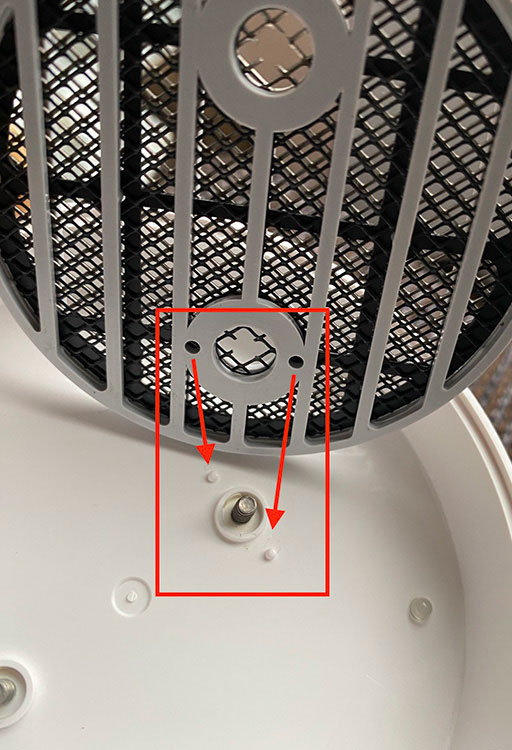
Fitting the AquaPure grille

Absolutely! But make sure you give your sink a thorough clean beforehand to achieve the best possible results.

Materials

We advise against using imitation products. In electrolysis, the material of the electrodes makes a significant difference. Not all devices that use electrolysis are therefore the same. Differences in electrode materials, construction and operation can affect the substances produced during electrolysis.

Scientific research from 2020 shows that chromium-6 can be produced by certain stainless steel electrodes under specific conditions. This research concerned alkaline electrolysis for hydrogen production, not domestic appliances for cleaning fruit and vegetables. It therefore does not prove that imitation versions of the AquaPure release chromium-6.

According to the product specifications, the original AquaPure has a titanium cathode and an anode with a ruthenium-iridium coating. The device does not use stainless steel electrodes. This avoids the specific pathway through which chromium can be released from stainless steel electrodes.

We source the AquaPure directly from the manufacturer. Laboratory results are available for this appliance, although not all test data is fully public. When purchasing from other suppliers, we recommend that you carefully check the origin, the materials used and the available test results.

Counterfeit models are often difficult to distinguish from the original (apart from the price). However, they look slightly different, particularly on the inside:
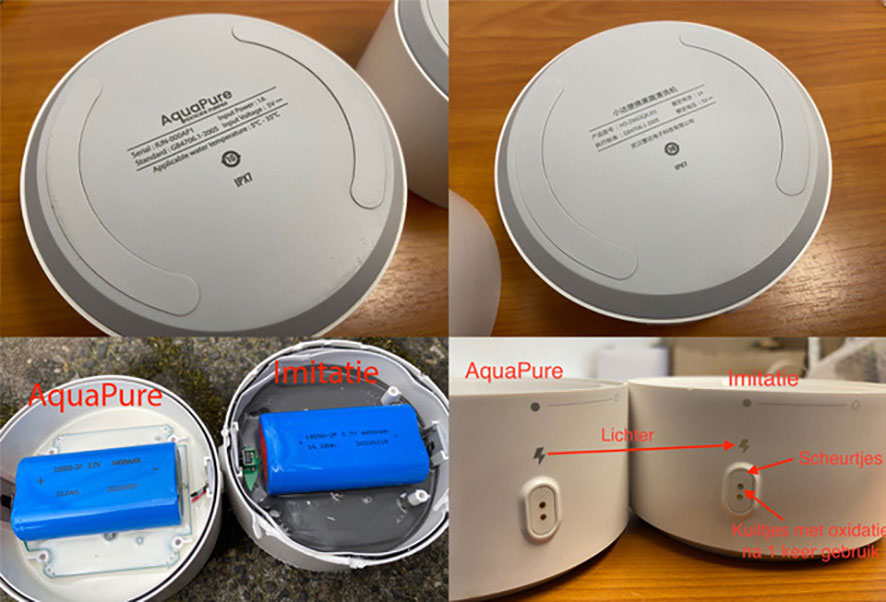
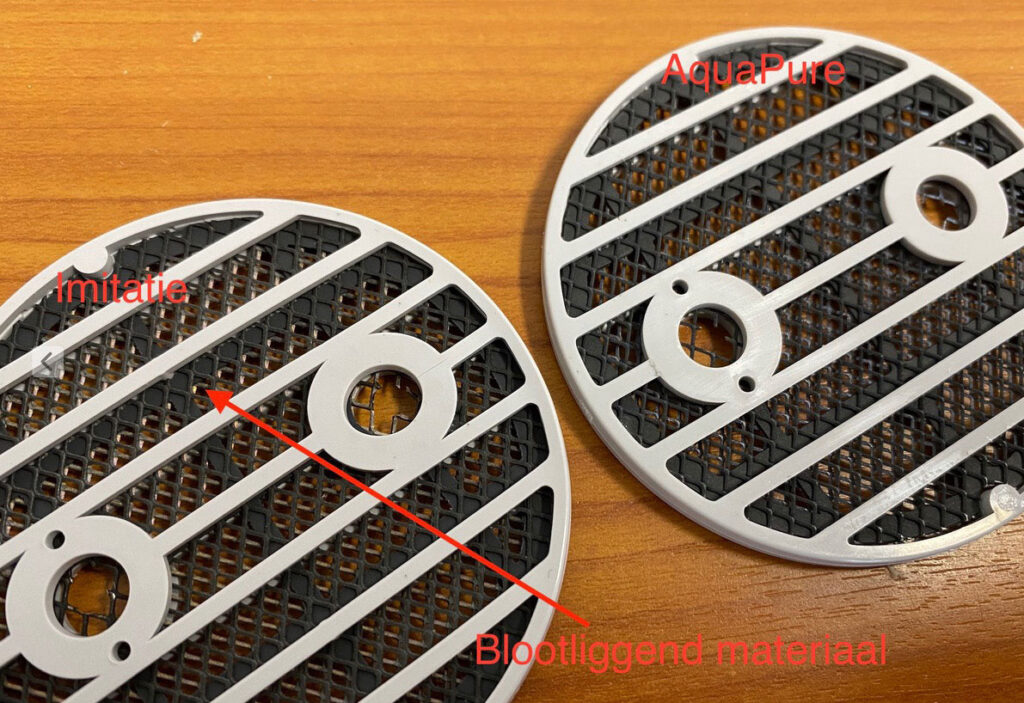
AquaPure vs imitation

According to the manufacturer, the AquaPure is made from stainless steel and ABS plastic.

ABS stands for acrylonitrile-butadiene-styrene. It is a sturdy plastic that is widely used in products where durability and wear resistance are important.

The manufacturer states that the ABS used is a recycled plastic compound that is fully recyclable. According to the manufacturer, ABS is also more sustainable, lasts longer and is easier to recycle than PVC.

The AquaPure’s electrodes are made from different materials. According to the product specifications, the cathode is made of titanium and the anode has a ruthenium-iridium coating. The AquaPure therefore does not use stainless steel electrodes.

Yes, according to the manufacturer’s written statement, the AquaPure is free from phthalates, PVC, BPA and BPS.

According to the manufacturer, the casing is made of stainless steel and ABS plastic.

This information comes directly from the manufacturer. It is a statement regarding the materials used and does not constitute independent laboratory testing for the presence of these substances.

100 x 50 millimetres / 3.94 x 1.97 inches

The charging cable supplied has a USB connector. This means you can charge your AquaPure using any USB plug (not USB-C) you have at home. A phone charger, for example!

Yes, the magnetic charging cable is included in the box. It’s tucked away quite well, though, as it’s in the false bottom of the box. PLEASE NOTE! There’s no plug included, but it’s just a standard USB plug, which everyone tends to have lying around at home these days.

Cleaning, maintenance and storage

Most AquaPure units are easy to open. However, with some models, the lid can be difficult to remove, particularly if it has not been screwed on properly or if there is moisture or sand between the lid and the unit. It is therefore advisable to only open the AquaPure when it is dry. If you do need to open the lid and it is stuck, try using a fork with a plastic handle. Insert the tines of the fork into the smallest opening of a slot in the lid to remove it.

After daily use, or after each use, simply give your AquaPure a quick rinse under the tap. Make sure you rinse the entire unit, taking particular care to allow the water a moment to flow through the mesh filter. Then dry everything off, making sure not to forget the charging port to prevent corrosion. After that, you can turn the device upside down for a moment to let any excess water drain out from inside. You can then turn the device the right way up again and leave it to air dry. It’s important not to forget this final step, otherwise moisture and condensation will remain inside, which could shorten the lifespan of your AquaPure.

It is advisable to take the AquaPure apart once a month and give it a thorough clean by removing the lid, wing nuts and the electrolytic plate, and cleaning everything thoroughly with a cloth or small brush. You can then put it back together again. When refitting the grille, make sure you do so correctly. You can tell by the indentations and raised areas, as shown below:

Fitting the AquaPure grille

If you prefer to wash all your fruit and vegetables at the same time, we recommend running several wash cycles.

Our recommendations for optimal cleaning results are as follows:

1 to 3 litres of water: One cleaning cycle
4 to 6 litres of water: Two cleaning cycles
7 litres of water or more: Three cleaning cycles

To start a new cycle, simply click the ON button again. To improve cleaning efficiency, we recommend adding a pinch of salt.

After daily use, or after each use, simply give your AquaPure a quick rinse under the tap. Make sure you rinse the entire unit, taking particular care to allow the water a moment to flow through the mesh filter. Then dry everything off, making sure not to forget the charging port to prevent corrosion. After that, you can turn the device upside down for a moment to let any excess water drain out from inside. You can then turn the device the right way up again and leave it to air dry. It is important not to forget this final step, otherwise moisture and condensation will remain, which can shorten the lifespan of your AquaPure. It is advisable to take the AquaPure apart once a month and give it a thorough clean by removing the lid, wing nuts and the electrolytic plate, and cleaning everything thoroughly with a cloth or small brush. You can then put it back together again. When refitting the grille, make sure you do so correctly. You can tell by the indentations and raised areas, as shown below:

Fitting the AquaPure grille

Warranty

Yes, every AquaPure comes with a 2-year warranty.

Manuals

Yes, this one is available and you can Download here.

Test results

No. Research into electrolyzed water shows that certain pesticide residues can be reduced, but the results vary depending on the substance, the type of fruit or vegetable, and the treatment. Pesticides that have penetrated the produce may remain.

Various laboratory results are available for the AquaPure.

In 2022, it was measured that Eurofins in the Netherlands a reduction in the glyphosate concentration in water from 6,100 to 2,500 micrograms per litre after one treatment cycle. That is approximately 59% less. The water samples were supplied by the client. Eurofins therefore did not independently test the full treatment on fruit and vegetables.

In addition, Gmicro Testing Lab in China, acting on behalf of the manufacturer, reported, amongst other things, 95.2% less glyphosate and 95.6% less chlorpyrifos on the products tested after two treatment cycles.

The publicly available information does not contain the full set of measurement data for all tests. It is therefore only possible to assess the results independently to a limited extent.

There is also scientific research into electrolysed water in general (1, 2, 3, 4, 5, 6, 7).. This shows that this technique can reduce certain pesticide residues. The results vary depending on the substance and the treatment applied.

The manufacturer has also commissioned tests involving, amongst other things, bacteria, a hormone and an antibiotic. You can find these results on the manufacturer’s website.

To the best of our knowledge, no independent published research has yet been carried out into the performance of the AquaPure itself on fruit and vegetables.

Laboratory results are available for the AquaPure, but this does not mean that the device as a whole has been independently certified for the removal of pesticides or micro-organisms.

Eurofins has measured the glyphosate concentration in water samples submitted in the Netherlands. In addition, a laboratory in China has analysed various substances, including pesticides, on behalf of the manufacturer.

The manufacturer has also published the results of tests involving, amongst other things, bacteria, a hormone and an antibiotic. Some of these studies were carried out in water rather than on fruit or vegetables.

The results vary depending on the substance tested and the test setup. We are therefore unable to guarantee a general removal rate for the AquaPure.

You can view the available results via the Eurofins report and the manufacturer’s website. On our product page and in the article on Helder we explain what these studies do and do not demonstrate.

Replace

The AquaPure is a one-off investment designed to last. There are no expensive filters or other parts that need replacing.

www.alternatievemiddelen.nl’s rating at WebwinkelKeur Reviews is 4.9/5 based on 1,913 reviews.