
Frequently Asked Questions: AquaPure Cleaner
Find the answers to frequently asked questions about AquaPure products here. These are updated from time to time. All answers are based on information from the manufacturer’s knowledge base, supplemented by our own experiences.
Usage
My fruits and vegetables float—will everything be removed?
Some types of fruits and vegetables tend to float, which prevents the electrolyzed water from working effectively. You can easily solve this by placing a plate or cutting board on top of your fruits and vegetables while the AquaPure is running. This keeps the fruits and vegetables submerged, ensuring optimal cleaning. And your cutting board will be completely disinfected, too!
Is electrolysis really safe?
The mechanism of electrolysis has been extensively studied and has been deemed very safe in many studies (1, 2, 3, 4). It is important, however, to rinse your fruits and vegetables under the faucet using a colander after cleaning them to remove any remaining traces of the electrolyzed water. You should not drink the (residual) water from the electrolysis process. Some people are startled by the smell of chlorine (bleach), but this is completely normal.
Aren't there pesticides in the fruits and vegetables, too?
It is true that pesticides can enter the fruit through the skin
, but virtually all studies agree that this is usually only a small amount. The problem really lies mainly with the skin. There are more than 1,000 pesticides on the market, each of which works differently. We can’t lump all pesticides together. In the past, we did have neonicotinoids, which are known to spread throughout the entire plant (and to be lethal to bees), but their use has been strictly restricted in the EU. With virtually all of them, it seems that the problems are mainly limited to the skin. Incidentally, the thicker the skin, the better.
How often can I use the water?
For a smaller amount of fruits and vegetables, one 5-minute cycle followed by an additional 5 minutes of soaking time is sufficient. For a larger portion in a larger container, we recommend 2 cycles of 5 minutes each, followed by 5 minutes of soaking time. In principle, you can now use the electrolyzed water for a second portion, but AquaPure itself recommends starting over with fresh water. This way, we can be sure there is no contamination from pesticides carried over from the previous portion. After treatment, it’s important to rinse your fruits and vegetables briefly under the faucet.
How much salt should I use?
A pinch (tip of a knife) of salt in a regular container of water is enough. Add the salt to the container, then fill it with water. Stir a little more if you see any undissolved salt. Once the salt has dissolved completely in the water, the AquaPure can be used.
What kind of pan should I use?
In principle, you can use the “ AquaPure ” in any container—usually a stainless steel sink or a plastic basin. However, we prefer glass. IKEA sells a 28-cm glass bowl called TRYGG for just a few euros.
It's as if this bowl were made for the AquaPure , because, as you can see, it fits perfectly on the bottom. It doesn't get any cheaper or healthier than this!
Can I also treat cut fruits and vegetables?
You should not treat cut vegetables and (dried) fruit with the AquaPure , not only because the vitamins and minerals will leach out, but also because these foods can absorb the electrolyzed water. Electrolyzed water contains aggressive free radicals that effectively neutralize pesticides, but you don’t want to ingest them. That’s why it’s important to rinse your fruits and vegetables under the faucet for a moment after cleaning them. Alternatively, you can briefly soak them in a bowl of filtered water. Always let your fruits and vegetables dry thoroughly after washing before putting them in the refrigerator; otherwise, they may develop mold.
What can and can't I clean with the AquaPure?
We recommend washing at least everything on the so-called “Dirty Dozen” list with the device. These include strawberries, nectarines, apples, grapes, bell peppers, cherries, peaches, pears, celery, and tomatoes. For fruits and vegetables on the “Clean Fifteen” list or those that are organic, a thorough rinse under the faucet is sufficient. There’s no point in cleaning fruits and vegetables with thick skins, such as bananas, oranges, kiwis, onions, mangoes, pineapples, melons, or avocados. The device is only suitable for whole (leafy) vegetables and fruits. It’s best to peel conventional potatoes; they don’t need to be treated with the AquaPure . We recommend eating organic potatoes with the skin on. You can treat them, but it isn’t strictly necessary if you scrub them thoroughly under the faucet with a brush beforehand. Mushrooms can absorb moisture, so we advise against treating them. Mushrooms, incidentally, are on the “Clean Fifteen” list, so it’s not strictly necessary to wash them thoroughly.
What is important to keep in mind when using the AquaPure pesticide cleaner?
The AquaPure is designed to provide you with many years of enjoyment. To extend its lifespan, it’s important to keep a few things in mind. Here are 7 important tips for using the AquaPure and ensuring the device’s long lifespan:
- Don't use too much salt—a pinch is enough!
- After use, dry the device thoroughly, paying special attention to the charging contacts to prevent corrosion.
- Don't use water that's too cold; it's better if it's about room temperature.
- It's better to wash a lot of fruits and vegetables all at once than to wash just 1 or 2 at a time. That way, you'll conserve battery power.
- Do not turn on the AquaPure unless it is in the water.
- Also, never store the device for an extended period of time with a dead battery, as this can damage the battery.
- Clean your AquaPure regularly; see also the user manual.
My AquaPure isn't working anymore. What can I do on my own?
It's a bummer that the AquaPure isn't working anymore. There are a few steps you can try to fix the problem and see if we can get the device up and running again.
- If it no longer charges properly: Moisten the charging port with (organic) vinegar and let it soak in for a while (on a kitchen towel—apply the vinegar and let it sit for half an hour). Then scrape the charging port with a sharp knife or other object to remove dirt or rust (corrosion). Next, recharge the AquaPure .
- Make sure the device is fully charged. To do this, connect the device to the charger and let it charge for at least 5 hours. Make sure the charger is properly connected to both the device and a power source.
- Once the device is fully charged, you can perform a hard reset. To do this, press and hold the power button for about 10–15 seconds until the device turns off. Then release the power button and try turning the device back on.
- If the device still won't turn on, try connecting it to a different power source or use a different charging cable. Sometimes, defective cables or power sources can prevent the device from charging properly.
It's also possible that some parts have come loose. To fix this problem, follow the steps below:
- Open the top of the device, and you'll see two screw knobs. See the image below.
- Next, turn the two screw knobs to make sure they are tight.
- Also check to make sure the grate is properly in place (you'll see two indentations on the grate and two protrusions on the appliance; they can only fit together one way).
- Screw the top back on and charge the AquaPure for up to 5 hours.
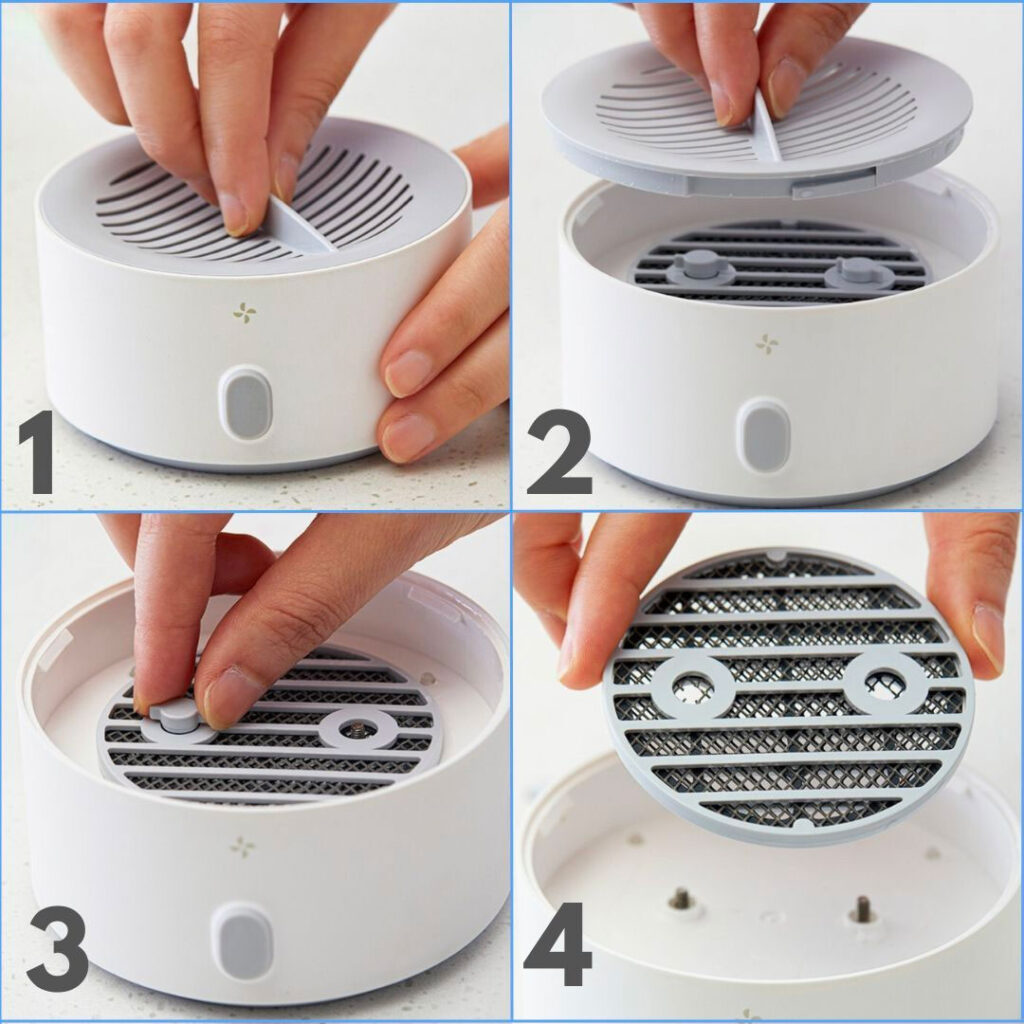
If your AquaPure still isn't working after following the steps provided, we'd like to receive a short video of your AquaPure device showing the issues you're currently experiencing. We'd also appreciate a photo of the bottom of the device, the side with the power button, and the side with the charging port. You can easily send this to us via WhatsApp; otherwise, please contact us.
Why won't my AquaPure charge anymore?
Over time, exposure to oxygen and water can cause the contact points to oxidize or corrode. This, in turn, can prevent proper contact with the charging cable, causing the device to stop charging. So if the AquaPure no longer charges (the charging cable is plugged in, but the red light no longer flashes), it’s likely that there’s corrosion on the contact points, which is the cause of the problem. With the AquaPure , it’s important to make sure it’s completely clean and dry after each use; otherwise, corrosion will form on the contact points (especially there). This is because there’s salt in the water, and the combination of water and salt—along with not drying it off—causes corrosion on the device. You’ll notice this mainly on the contact points and on the small grille inside.
So check to see if you can still see a golden color on the contacts. If there’s no golden color visible—or if it’s gone from just one contact—then there’s corrosion on the contacts. To fix the problem, do the following. Dip a piece of paper towel in (organic) vinegar and then place (or tape) it onto the contacts so that they come into contact with the vinegar. Let it sit for an hour. Then rinse the device under the faucet and gently scrape the contacts clean with a small kitchen knife. Once they’re clean again (you’ll see the gold color return), try charging it again. It should work normally after that.
If this is the solution, then you’ll know that you need to keep the contacts clean and dry from now on. Also, don’t use too much salt, as it can cause corrosion on the
contacts. If this doesn’t solve the problem, please contact us.
How often can I use my AquaPure before it needs to be recharged?
With daily use, the device should be charged every two to three weeks.
Materials
Are the AquaPure 's imitation devices just as good?
We are often asked whether inexpensive generic versions or identical Chinese copies of this product are just as good. We strongly advise against this. Counterfeit devices may have stainless steel electrolysis plates, which, according to studies (8), can release harmful and carcinogenic chromium-6. That is why the cathode of the AquaPure is made of titanium and the anode is coated with ruthenium-iridium for added safety. Even though it’s hard to tell at a glance, counterfeit models look slightly different—especially on the inside:
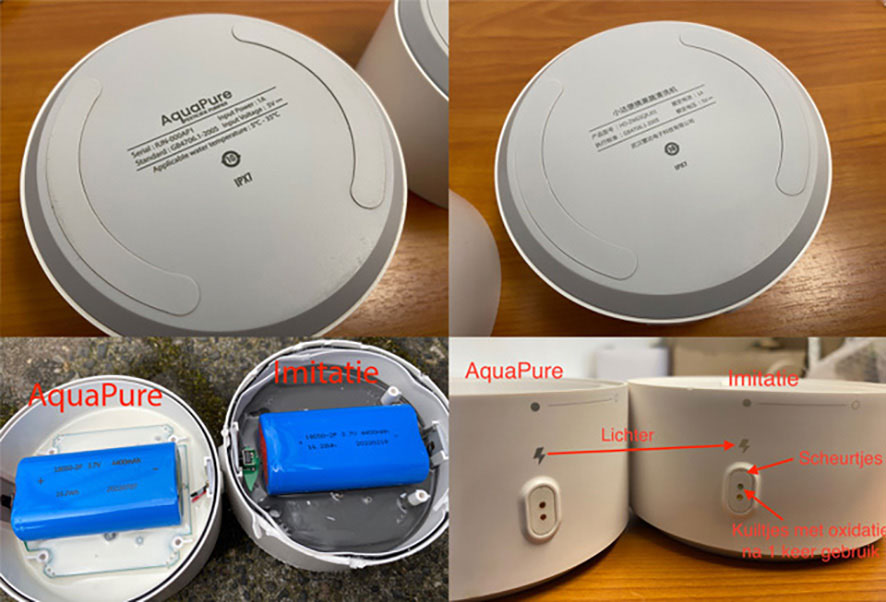
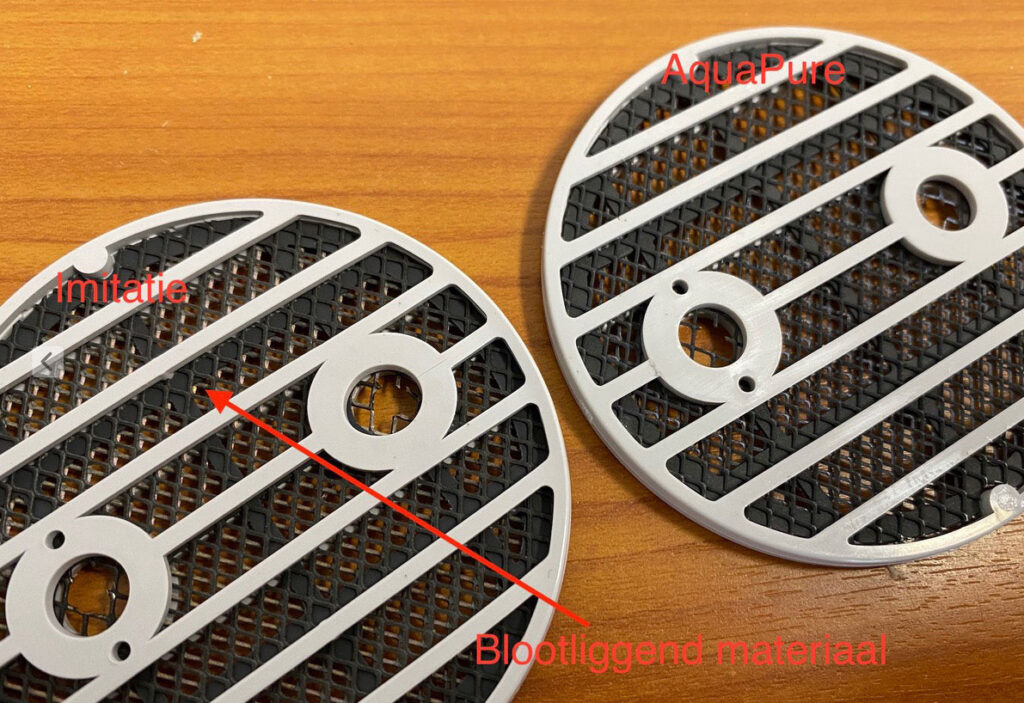
It's very important to choose reliability. The AquaPure has independent test results, which is by no means guaranteed with cheap knockoffs.
What materials is the AquaPure made of?
The AquaPure is made of stainless steel and ABS plastic. Acrylonitrile butadiene styrene (ABS) is a recycled plastic compound that is itself fully recyclable. ABS is also generally considered to be more durable, have a longer lifespan, and be easier to recycle than PVC.
Is the Aquapure phthalate-free, PVC-free, and BPA/BPS-free?
Yes, the AquaPure is phthalate-free, contains no traces of PVC, and is completely BPA/BPS-free.
What are the dimensions of the AquaPure device?
100 x 50 millimeters / 3.94 x 1.97 inches
What type of plug is needed for the charging cable?
The included charging cable has a USB connector. That means you can charge your AquaPure with any USB plug (not USB-C) you have at home. Like the one that comes with a phone charger, for example!
Is the charger included?
Yes, the magnetic charging cable is included in the box. It’s tucked away quite well, though, because it’s in the double bottom of the box. PLEASE NOTE! There’s no plug included, but it uses a standard USB plug that just about everyone has lying around at home these days.
Cleaning, Maintenance, and Storage
How do I open my AquaPure ?
Most AquaPure devices are easy to open. However, on some models, the lid may be difficult to remove, especially if it isn’t screwed on straight or if there is moisture or sand between the lid and the device. It is therefore recommended that you only open the AquaPure when it is dry. If you still need to open the cover and it is stuck, try using a fork with a plastic handle. Insert the tip of the fork into the smallest opening of a slot in the cover to remove it.
How do I clean my AquaPure ?
After daily use or any use, simply rinse your AquaPure briefly under the faucet. Make sure to rinse the entire device, giving the water a moment to flow through the small grille. Then dry everything off, making sure not to forget the charging port to prevent corrosion. After that, you can turn the device upside down for a moment to let any excess water drain out from the inside. Then turn it right side up again and let it air dry. It’s important not to skip this last step; otherwise, moisture and condensation will remain inside, which can shorten the lifespan of your AquaPure .
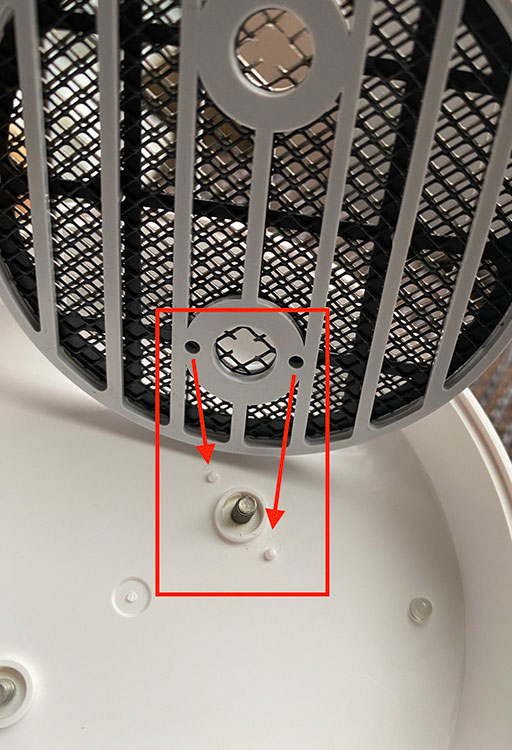
It’s a good idea to take the AquaPure apart once a month and give it a thorough cleaning by removing the cover, wing nuts, and electrolytic plate, then cleaning everything thoroughly with a cloth or small brush. You can then put it back together. When reattaching the small grid, make sure you do so correctly. You can tell by the indentations and bumps, as shown below:
Is one purification cycle sufficient?
If you prefer to wash all your fruits and vegetables at once, we recommend running multiple wash cycles.
Our recommendations for optimal cleaning results are as follows:
1 to 3 liters of water: One cleaning cycle
4 to 6 liters of water: Two cleaning cycles
7 liters of water or more: Three cleaning cycles
To start a new cycle, simply click the ON button again. For better cleaning performance, we recommend adding a pinch of salt.
How often should I clean the AquaPure ?
After daily use or after each use, simply give your AquaPure a quick rinse under the faucet. Make sure to rinse the entire device, taking a moment to let the water flow through the mesh screen. Then dry everything off, making sure not to forget the charging port to prevent corrosion. After that, you can turn the device upside down for a moment to let any excess water drain out from the inside. Then you can turn it right side up again and let it air dry. It’s important not to skip this last step; otherwise, moisture and condensation will remain inside, which can shorten the lifespan of your AquaPure . It’s a good idea to take the AquaPure apart once a month for a thorough cleaning by removing the cover, wing nuts, and the electrolytic plate, and then cleaning everything thoroughly with a cloth or small brush. You can then put it back together. When reattaching the grille, make sure to do so correctly. You can tell by the indentations and bumps; see below:

Warranty
Does the AquaPure come with a warranty?
Yes, every AquaPure comes with a 2-year warranty.
Manuals
Is there a Dutch-language manual available for the AquaPure pesticide cleaner?
Yes, this is available and you candownload it here.
Test Results
How do I know if the AquaPure really works?
The effectiveness of the AquaPure has been demonstrated, among other things, in a Dutch laboratory study conducted by Eurofins. This study showed that the AquaPure can reduce glyphosate in water by about 60% in a single cycle. A more recent study from AquaPure shows that two cycles can remove more than 95% of the glyphosate on the skin. Older studies from AquaPure also demonstrate that this device is effective. All tests were conducted in international standard laboratories with strict safety protocols. All results can be found onthis webpage from the manufacturer.
In addition, there are many independent studies available on PubMed that show that electrolysis is capable of effectively breaking down pesticides (1, 2, 3, 4, 5, 6, 7).
Are there any certified laboratory test results?
The manufacturer rigorously tests countless different pathogens and chemicals. This takes some time, as all tests must comply with an internationally recognized standard for laboratory testing.
AquaPure s have been proven to remove up to 99.9% of pesticides, bacteria, and other harmful substances from your fruits and vegetables. All tests are conducted in international standard laboratories with strict safety protocols. You can find all the results onthe manufacturer’s website.
Replace
Are there any parts that need to be replaced periodically?
The AquaPure is a one-time investment built to last. There are no expensive filters or other parts that need to be replaced.