


Hey, welcome to Alternatievemiddelen.nl from Tom & Melanie

Fast delivery

Free delivery from. €75, - (NL) & €100 (in BE and DE)

Collection possible

Nutrition

Books about nutrition

Frequently asked questions about Berkey water filters

Find the answers to frequently asked questions of the Berkey products here. These are also supplemented from time to time. All answers are based on all information from the manufacturer's knowledge base, supplemented with our own experiences.

The Environmental Working Group (EWG) tested 10 water filter systems for their ability to remove 25 individual per - and polyfluoroalkyl substances (better known as "PFAS") in tap water. During EWG's testing, the Berkey water filter (operated with Black Berkey filter elements) removed PFAS to undetectable levels, which placed the system in the category "Best overall".

The Berkey water filter was also praised for its large capacity compared to other water filters tested, and “exceptionally long filter life” (each pair of authentic Black Berkey filter elements can filter up to approximately 22,700 liters (11,350 liters each) of tap water before replacement is recommended). CBS News Philadelphia produced a news report about EWG's tests, which mentions the Berkey water filter. You can view this here. CBS Colorado also mentioned the Berkey water filter in a TV news segment about EWG's test, you can view it here.

EWG's water filter test results were released a week after the United States Geological Survey (USGS) their studies published showing that drinking water from nearly half of American households contains at least one type of PFAS. PFAS have been in use since at least the 1950s and have been linked to a wide range of human health problems, including certain types of cancer and developmental, metabolic, immune disorders and more. PFAS are called "forever chemicals" due to the fact that they take a very long time to break down in the environment.

To protect against PFAS in your drinking water, make sure you have a final barrier system. This includes a Berkey water filter equipped with the powerful Black Berkey filter elements that have been independently tested by accredited laboratories to remove perfluorinated chemicals below detectable levels.

Read more:
- EWG: News Release | Guide to PFAS Water Filters
- CBS Colorado: Which Water Filters Can Block PFAs
- CBS News Philadelphia: Environmental Group Tests to Find the Best Water Filters for Removing PFAS
- New Study: “Forever Chemicals” Found in Nearly Half of US. Tap Water
- Do Black Berkey® Elements Remove PFAS and Other PFCs in Drinking Water?
- Black Berkey® Elements: The Final Barrier against PFOA and Other PFCs in Drinking Water
For all laboratory test results of the Berkey water filter: click here. You will be referred to the manufacturer's knowledge base, where all results are on one page. This concerns all tests carried out with the Black Berkey filter elements and these are the filter elements of the Berkey water filter.

In addition, this page also contains the test report of the Berkey Fluoride & Arsenic (PF-2) filter elements.

The top container of your Berkey water filter must be completely run-through in about 2 hours (a small layer remains). The better the priming is successful, the faster the flow speed will be. So if it takes longer than 2 hours, the advice is to prime again. For the first time, priming is expected to not have worked out well and there is still too much air in the Black Berkey filter elements. With long-standing use, this is a sign to prime again.

Priming ensures that the air goes out of the filters again and then they continue faster. You can do this Priming Button, the Black Berkey Primer or the blue Primer Rite use. See also the instructional videos.

Is it the first time you use the Berkey water filter? Then the following is equally important:
- the filter speed will increase slightly in the first 12 to 24 hours.

If the speed remains low and water was allowed to remain in the top container after more than 2 hours. Then take contact we will work with us and we will be happy to help you.

It is very normal that a few centimeters of water remains in the top container. The Black Berkey filter elements are on an edge and of course no water can pass through this edge. In addition, the water pressure is very low if there is only a little water left in the top container, so that the water can no longer pass through. This applies if the water is still just slightly above the edge of the filter element.

You can throw away any remaining water if you fill the top container of your Berkey water filter again.

This is possible! No Black Berkey filter element is the same, they are all unique. This allows one filter element to pass faster than the other. The differences arise during production (baking process) and you often see that the filters in the same box are approximately the same, but this does not have to be the case. So it's not a problem and not something to worry about.

If you experience a noticeable difference in the filter speed of the Black Berkey filters, this is a signal to prime again. Before you clean, try to solve this with priming the Black Berkey filter elements again. You should not clean too often and when using tap water, once every 6 months is sufficient. If priming doesn't yield a profit in filter speed, it's time to clean. But after cleaning you also have to prime again.

After using for a while, the air slowly takes over in the filters again

If you do need to clean the filters, see the instructions under the heading "Cleaning, maintenance and storage".

There is then talk of a so-called Airlock. Then the containers are so perfectly connected that no air can be added. This is difficult to predict in advance when something like this will occur, because sometimes they close too perfectly.

There are two ways to solve this problem:

Option 1. Use the Anti-Airlock Clip. If you have ordered a Berkey water filter from the summer of 2022, you have already received it. This clip is in the Priming Starter Kit, which will be supplied free of charge with a Berkey water filter from the summer of 2022. If you do not have the Priming Starter Kit, you can order the Anti-Airlock Clip separately from us click here.
Place the clip on the edge of the bottom box, with the round side out. You then put the top box back on. Now sufficient air will be able to be added, a vacuum will no longer be created and the water will simply come out well.

Option 2. You can also try turning the top box in different positions to see if it fits differently and allows air to pass through. Another solution is to "roll" the bottom tray:
- Carefully remove any Black Berkey filter elements from the system and set the top tray aside.
- If already installed, remove the tap from the bottom tray.
-Put a towel on a smooth, hard surface. Place the bottom tray on its side on the towel with the towel firmly in place.
- Apply light pressure to the side of the bottom tray with both hands; roll the chamber back and forth over the hard surface. Focus your attention on the top part of the bottom box. This will slightly reshape the lower chamber and allow good airflow between the upper and lower trays.

If you choose roles, it may not be resolved after one try, but you could try again.

The Fluoride and Arsenic filters (PF-2) last a maximum of 3,700 liters of water or 1 year, which is the first thing to happen. Of course it is very difficult to keep track of the number of liters, so we recommend keeping for one year.

The life of the filter varies depending on the source water and the degree of contamination. The recommendation for when the filter should be replaced depends on several factors. For example, for filtering chlorine, the filters last more than 45,000 liters per pair. However, there are several contaminants in the water and the amount of what is in it may differ.

The Black Berkey filters have been developed to last many years. However, we now live in a different time than a few years ago. The number of contaminants has only increased and has become increasingly intense (think, for example, of PFAS or the significant increase in drug residues, pesticides, etc). This has a huge effect on the filters, so the filters need to be replaced a little earlier. It is of course difficult to keep track of what is in the water and to what extent and that is why we recommend replacing the Black Berkey filters for a maximum of 3 years when using tap water. If you use water from another source, the advice is to replace it earlier.

It is good to know that a Berkey water filter does not completely remove the lime from the water. Larger amounts are reduced and synthetic lime is removed. However, a Berkey water filter retains good minerals (which naturally belong in water and are good for humans) in the water. And lime (calcium) is one of them. So you keep the mineral lime in the water, and this can still cause some deposits. In short, a Berkey water filter is not there to remove lime from the water.

If water leaks from the tap connection, this most likely has to do with the fact that the tap is not properly mounted. Therefore, empty the bottom container and dismantle the tap. Then check whether you have all the parts in the right place. It is therefore important that you have 1 rubber ring on the outside and 1 rubber ring on the inside. Then replace the tap and tighten the nut (on the inside) until you can no longer do it. Then you hold the nut on the inside and turn the tap on the outside. You notice that he gets even more stuck. So you do this until it doesn't work any further. If the tap is not straight, do the following: you release the nut on the inside and you only turn with the tap on the outside until it is straight. It then turns in its entirety. If you accidentally turned too far, DO NOT turn back. You then untie it again. So if you are too far, you will continue turning whole again until it is properly seated again.
If all goes well, the tap will no longer leak at the connection.

If water gets between the top and bottom tub of your Berkey water filter, that means the bottom tray is too full. This occurs when the top box is filled again, while the bottom box is not yet empty. It is then simply filtered through and then the bottom container overflows. This then ends between the two containers.
It is best to fill it up the first time, fill the top container completely. You let this water run through. If you notice that the bottom container is almost empty (via sight glass tap or via the pressure of the water), then fill the top container completely again. You can do this because the top box is slightly smaller than the bottom box and the filters are also located in the top box, which therefore take up space. The bottom box therefore has overcapacity compared to the top box. By doing it this way, you prevent the water leakage between the two containers.

IMPORTANT INFORMATION IN ADVANCE
The red dye test is only there to check whether your Berkey water filter has been mounted correctly, so there is no water other than from the stems of the Black Berkey filter elements and the filters are not exhausted. Berkey Water Systems has no independent test results showing what percentage of red food coloring is filtered out. They cannot therefore officially claim that this contamination is reduced. Thus, if the instructions below are not followed and, for example, a higher concentration of red dye is administered, then it is likely that it will not be reduced by 100% percent. It is therefore important to follow the instructions below carefully and this mainly concerns the amount of red dye and carrying out the test no more than twice a year.

The Black Berkey filter elements are powerful enough to remove red food coloring from water. By performing a red dye test you can be sure that your Berkey water filter system is working properly.

GUIDELINES

  • We recommend that you perform this test at first use and every six months thereafter (after cleaning) to ensure that the Black Berkey filter elements are working properly.
  • The red dye test is only intended for the Black Berkey filter elements and NOT for other filter elements (such as the Fluoride & Arsenic filters) that do not filter out the dye. This test is also not recommended for the Sport Berkey drinking bottle.
  • Make sure the dye is RED. Red food coloring (unlike the other colors) contains no minerals, so the element recognizes it as contamination. In addition, do not use a natural red dye (such as beet juice), this is also not recognized as a contaminant. The idea is to take a synthetic red dye and so take the original red dye.
  • The red dye test should be performed after the Black Berkey filter elements have been primed.

PERFORM THE TEST

NOTE: view our instruction videos for a video of performing the red dye test.

1. Start with an empty water filter system (top and bottom bucket) and remove any fluoride filters (if installed).
2. Place only the top tray (with the Black Berkey filter elements installed) on glasses of similar size (so the stems of the filters protrude into the glass). This is useful to immediately see which filter passes and fails the test.
3. In a separate jug, add 3 drops (= 0.15 ml) of dye per liter of water and mix (with a bottle original red dye so you can perform a full test several times). Pour the red water into the top container until the filters are completely submerged. Note: Never pour red dye directly from the bottle onto the filters or into the top container. Always mix the dye with water in advance in a separate jug.
4. Allow the water to filter from the top container into the glasses below. When the glasses are three-quarters full, pour the remaining water from the upper reservoir. Note: The glasses can fill at different speeds.
5. Check the water in each glass. It should be clear, without a pink or red tint, if the water in any of the glasses is red or has a pink tint, then that particular filter may be defective or exhausted. See below.

IF RED COLOR IS OBSERVED IN THE WATER, CHECK THE FOLLOWING:

1. Are the wing nuts properly secured? Do not tighten the wing nuts with tools; they must be tightened by hand until you feel resistance, then it will be enough. If the wing nuts are too tight, this can lead to damage to the threads of the stem and/or grooves of the wing nut. This can affect the seal. If this has occurred, please contact us.
2. Does your natural red food use dye or dye with a different color? Not natural red food coloring is the only type recommended for this test.
3. Is the black ring of the Black Berkey filter elements also in the top box and is the wing nut tightened at the bottom? If the black ring is on the outside of the lower box (i.e. directly at the wing nut), then this is not a good seal. This means the test fails. Place the black ring on the inside of the top tray and perform the test again.
4. Do the blocking plugs seal the unused holes properly (if applicable)? Are the blocking plugs firmly installed, so it really closes? For blocking plugs with bolt and nut, there must be a closing ring on both sides (so not on one side). If the plugs leak, it will cause the test to fail. Install the blocking plugs more firmly and perform the test again.
5. Are you retesting a filter element that has failed? Then make sure you rinse this filter element off first and primed again before retesting. In addition, make sure that all water is from the bottom container (or glass). If you use the bottom tray or a glass to collect water, rinse it completely with clean water first. Now you're ready to repeat the test.
6. If you have done all of the above and still fail a filter element for red dye test, take it contact on with us. The Black Berkey filter elements have a two-year warranty (in periods). View the warranty conditions.

NOTE: view our instructional videos for a video of performing the red dye test.

The Black Berkey filters are made from a patented mix of different components, including high-quality carbonized coconut shell. Berkey Water Systems confirms that there is no graphene oxide in the composition of the filter elements.

In addition, Berkey Water Systems does not have any test reports available that verify the reduction of graphene oxide by the Black Berkey filters. Without test results, they cannot claim that the filter elements are capable of reducing/removing this contamination.

There are three different types of blocking plugs:

  1. Black blocker plugs are standard with all Berkey Light water filters and some stainless steel models. The black plugs are made of FDA-approved Buna rubber.
  2. Broken white blocking plugs (rubber cork) can be supplied with the Berkey Light models and some stainless steel models. The off-white plugs are made of food-grade M18 pure gum rubber.
  3. White blocking plugs (bolt and nut) are used in some stainless steel models. These come with a nut, a screw and two transparent rings. The nut and screw are made of polypropylene. The rings are made of food-grade silicone.

Please note that the water in the lower chamber of your water filter will not touch any of the blocking plugs. The water is filtered before it reaches the lower chamber.

Yes, the basis of a Black Berkey filter element is BPA-free.

The Black Berkey filter elements are designed to remove heavy metals, but will not remove mineral salts added by a water softener. A water softener adds mineral salts to the water to soften it. The salt used to soften water is not extracted by a Black Berkey filter element and even causes the element to become clogged. You can still use a Berkey water filter if it is possible to bypass the water softener. Most water softeners have a bypass valve or a way to get water before passing through the softener. That's why we highly recommend using that water instead of running softened water through your Black Berkey filter elements.

Black Berkey filter elements do not necessarily need to be cleaned every time you clean the Berkey water filter (bottom and top trough) conversion. However, this can vary depending on the area and water source. In certain areas of the world, the water is much dirtier than in other areas and will require cleaning the elements more often; possibly even more than cleaning the rest of the system requires. If your water is muddy or very dirty, we recommend pre-filtering the water by running it through some kind of cloth, e.g.: shirt, sheet, bandana, etc. before filling the Berkey water filter. Although not necessary, this keeps the cleaning schedule for the elements low by capturing dirt that can clog the pores of your Black Berkey filter elements.

When is it time to clean your filters?

  • Cleaning the elements should be done when you experience a drastic reduction in flow rate.
  • You may also consider cleaning the elements periodically. For example, every 6 months (NOTE!! Never more than once every 6 months, if you do not experience a reduction in flow rate). The advantage of this is that you will not experience a slow flow speed. Cleaning elements according to a regular schedule is at your discretion. This is a suggestion, not an obligation.

How do you clean the filters?

  1. Empty your Berkey water filter and dismantle the Black Berkey filter elements.
  2. Use a scouring pad or hard brush and gently scrub the outside of the Black Berkey filter elements under cold running water.
  3. Prime the filters again. If you are not familiar with this process, check out our instructional videos.
  4. Reassemble the Black Berkey filter elements into the Berkey water filter.
  5. Finally, fill your Berkey water filter and possibly perform a red dye test as described in the instructional videos, to ensure that the Black Berkey filter elements are still effective.

A TDS meter does not measure much change between unfiltered water and Berkey filtered water. This is normal and the answer has to do with what a TDS meter actually measures. According to tdsmeter.com "Total Dissolved Solids (TDS) means the total amount of mobile charged ions, including minerals, salts or metals dissolved in a given volume of water, expressed in units of mg per unit volume of water (mg/L ), also known as parts per million (ppm). TDS is directly related to the purity of water and the quality of water purification systems and affects everything that consumes, lives in or uses water, organically or inorganic, for both good and bad.”

This statement is both correct and incorrect. It is true what a TDS measurement consists of, namely the “total amount of mobile charged ions, including minerals, salts or metals dissolved in a certain volume of water”. It is incorrect in its conclusion that TDS is related to the purity of the water and the quality of the water purification system. If the measure of a water purification system was how close the water could bring to pure H2 O, then perhaps it would be right. But people need minerals to live. So useful minerals in your water are actually a good thing. A high-quality water purification system should filter out things that are harmful to your body, but leave the useful things like minerals behind. Black Berkey filter elements are designed to leave healthy and beneficial minerals in the water and to extract the unwanted heavy metals such as lead and mercury, as well as sedimentary minerals such as iron oxide and aluminum.

So if you use a TDS meter, you will discover that the measurement is approximately the same both before and after the water has passed through the Black Berkey filter elements. And that's right. The Black Berkey filter elements retain all beneficial minerals. So, of the things that a TDS meter will actually detect, the Black Berkey filter elements will only remove unwanted heavy metals such as lead and mercury, as well as sedimentary minerals such as iron oxide and aluminum. Therefore, the TDS value won't change much unless you have a significant amount of heavy metals or sedimentary minerals in your water.

A TDS meter does not measure the amount of biological and chemical contaminants (including, for example, chemicals, drugs, hormones, many pesticides and their residues, bacteria and viruses). The most important thing is that you don't just rely on a TDS meter to measure whether your water is good. You can have low TDS water that contains harmful bacteria. You can have high TDS water that is completely safe (eg - pure, uncontaminated sea salt water... although you wouldn't drink it, but that's just because the mineral is salt). So make sure you know what a TDS meter actually measures.

If you have used your elements:

The method of storage depends on the time the Black Berkey filter elements are not used: a

If the filters are not used for 4 to 15 days and you want to avoid re-priming, remove the filters from the water filter, place them in a sealable bag or container and place the filters in the front of the refrigerator to prevent freezing. This keeps the filters largely saturated (wet), so that priming again is usually not necessary. If for any reason the filters are slower than normal, repurpose them until the outer wall of the filter starts sweating water droplets for 10 seconds.

For long-term storage, we recommend drying the filters and storing them closed. It is important that they are bone dry before long-term storage to prevent possible bacterial growth. An option for drying your filters is to leave them on a windowsill for one to three days and let them air dry. We also provide a tool to help with both priming and drying (purging). It's about the Black Berkey Primer. The advantage of drying (purging) with the Black Berkey Primer of the Black Berkey filter elements is that they dry very quickly. Once the filters are bone dry, place them in a storage bag such as a large, lockable bag. The elements are extremely powerful and can absorb odors and smoke from the air. By sealing them in a bag, they cannot absorb odors from the air. When you are ready to reuse the filters, clean them by scrubbing the outside with a scouring pad or a hard brush. Then prime the filters manually or with the Black Berkey Primer again, before placing them back in the water filter.

In theory, the shelf life of the Black Berkey filter elements is unlimited.

**Note that the above storage methods only apply to the Black Berkey filter elements.

If you've never used the elements:

If the elements are unopened and they are still in the original packaging, make sure you do not store the elements in a room with strong odors (such as a laundry room or garage). The elements have carbon as one of their components, so it is possible that they absorb the odors of the space in which they are stored. For example, if they are stored in a laundry room, they may pick up the smell of highly perfumed items such as washing powder.

** If you also store the top and bottom rooms of your Berkey system, it is best to empty both rooms before storing them. Water that has been standing still for a long time promotes the growth and production of bacteria. We recommend washing your Berkey system with soapy water before letting it dry.

If you have already used the elements:

The Berkey Fluoride & Arsenic filter elements (PF-2) can be stored briefly (see below) in the refrigerator; but certainly do not store them in the freezer. To do this, remove the filters from the water filter, place them in a lockable bag or container and place the filters at the front of the refrigerator to prevent them from freezing.

The Fluoride & Arsenic filter elements (PF-2) only last a year. Short-term means: the next use within the year. Remember that the longer the elements are not in use, their ability to filter Fluoride & Arsenic may decrease. Moreover, it is wise to prime them every 2 weeks if they are stored, to keep the storage process going.

If you have stored them in the refrigerator, we recommend repurposing the Berkey Fluoride & Arsenic filter elements (PF-2) before using them again. Do this for up to 1 minute each in both directions.

The Berkey Fluoride & Arsenic filter elements (PF-2) should not dry in the air, as this may cause some bacterial growth in the filters.

If you've never used the elements:

If the elements are unopened and in the original packaging, make sure you do not store the elements in a room that smells strong, such as a laundry room or garage. The elements have carbon as one of their components, so it is possible that they absorb the odors of the space in which they are stored. For example, if they are stored in a laundry room, they may pick up the smell of highly perfumed items such as washing powder.

Frequently asked questions Boroux water filters

Yes, the stainless steel holder is essential for good performance. It supports the upflow design, which directs water from bottom to top, reducing flow rate and increasing contact time between water and filter media. This optimized interaction improves fluoride reduction and overall effectiveness.

Yes, you need one BOROUX Proactive™ Fluoride filter for every BOROUX Foundation™ Black filter in your system. The BOROUX Proactive™ Fluoride filters are designed as a 1-to-1 product, meaning that each fluoride filter connects directly to one BOROUX Foundation™ Black filter.

This guarantees balanced flow, good filtration performance and maximum fluoride reduction throughout your system.

Proudly made in the US! Not in China or another Asian country.

The BOROUX Proactive™ Fluoride filter consists of two different layers. The inner layer is granulated carbon: small, loose grains of a mixture of different carbons are packed in the center of the cylinder filter. The outer layer of the filter is a nanocarbon. This mix of specialized carbon is poured into shape.

The lifespan of the filter varies depending on the water source (the quality of the water that goes into it) and its use. It is recommended to replace filters at 3,750 liters, which is approximately 6-12 months.

No testing for arsenic has yet been done.

The first filtration phase occurs when the water passes through the proven BOROUX Foundation™ Black filters flows with activated carbon. The BOROUX Proactive™ Fluoride filter is screwed and attached to the stem of the BOROUX Foundation™ Black filter. The second filtration phase takes place when the water flows through the double-acting BOROUX Proactive™ Fluoride filter.

After the water has passed the filters in the upper tray, it first comes into contact with the inner layer of the highly efficient granulated carbon filters in the lower tray. The water then filters through the patented nanocarbon outer layer. The patented Upflow design of the stainless steel housing keeps the water in contact with the outer layer for a long time, ensuring superior filtration. The filtered water exits the housing through the outlet holes at the top. This ensures almost even use of the entire surface of the fluoride filters, from bottom to top.

Yes, the BOROUX Proactive™ Fluoride filters are designed to be fully compatible with Berkey water filter. They are attached directly to the Black Berkey filters and therefore also hang in the bottom container, just like Berkey's fluoride filters. This allows you to continue using your existing Berkey installation while taking advantage of BOROUX's advanced fluoride-reducing technology. They of course also fit in with the conversion of other brands of gravity water filters, provided that Black Berkey filters or BOROUX Foundation™ Black filters are used.

Do you need help determining compatibility? Please contact us!

You can taste a subtle earthy or mineral-like taste when you first use your new BOROUX Proactive™ Fluoride filters. This is completely normal and temporary.

These filters use high-quality filter media that can initially provide a harmless taste. To prevent or fix this, we recommend priming each filter for at least 10 minutes with a higher water pressure before installing them. And the use of hot water (approximately 38 °C) is important advice. In tests, this method has solved the taste problem in 100% of cases.

For the most effective priming, use the blue silicone primer that came with the filters or the BOROUX Automatic Filter Primer Pump (electric). These help rinse the filters completely and properly and ensure that your water tastes delicious from the start.

Improper priming can lead to turbid water, lower flow rate, uneven filtration and shorter filter life. The primer pump ensures consistent, correct priming for optimal filter performance.

On the contrary, by using the Primer Pump, a complete and consistent priming guaranteed, which extends the lifespan of your filter and optimizes filtration performance.

Yes. The Primer Pump is compatible with Black Berkey filters and BOROUX Foundation™ Black and BOROUX Proactive Fluoride filters (adapter included with fluoride filters).

No, the Primer Pump is not waterproof. Do not completely immerse the Primer Pump in water.

The light on your primer pump gives you quick insight into the current battery status. This means any color and the way of burning:

Continuous green: fully charged and ready to use
Flashing green: busy charging
Flashing red: battery level is lower than 25% - charging soon
Continuous red/no light/empty: battery is low - needs to be charged immediately

If you are not sure whether the pump is working properly, we recommend that you fully charge it and recheck the light.

With a full battery you can at least 10 filters prime before you need to recharge the pump.
It takes about 90 seconds to fully prime one filter.

The cap is made of high quality stainless steel (304).

Yes, the BOROUX glass drinking bottle is dishwasher safe, but the stainless steel cap should only be washed by hand.

BOROUX glass drinking bottles can be used repeatedly without harmful chemicals entering the water. The cap is made of stainless steel inside and out and has a silicone seal. With the BOROUX glass drinking bottle you benefit from the convenience of plastic without endangering your health.

Although borosilicate glass can withstand temperature changes (because it does not expand like regular glass), we recommend using the BOROUX glass drinking bottles only for cold drinks.

Borosilicate glass has a wide range of applications. It is commonly used in cookware and laboratory equipment, as well as high-end products such as optical lenses, implantable medical devices, and aerospace equipment. It is also a popular material among artists, such as glass sculptors.

Although it is not completely unbreakable, it is more durable than regular glass. The bottom of the BOROUX glass drinking bottle is about 300% thicker than that of competing bottles to prevent breakage. When broken, borosilicate glass tends to crack into large pieces rather than splinter (it will break rather than splinter).

Borosilicate glass is a higher quality glass that is stronger, more durable and, above all, more resistant to cracks and thermal shock.

No, the Move Sleeve may only be washed by hand.

Absolutely! The sleeve is vacuum insulated to keep drinks hot or cold for a long time.

You can you BOROUX glass drinking bottle in your Move Sleeve use to cold drinks keep cold for a long time. Keep ice frozen all day.

Borosilicate glass can withstand temperature fluctuations (because it does not expand like regular glass). We recommend using warmer liquids in the Move Sleeve only if you place the glass drinking bottle in the Move Sleeve first before pouring the liquid into it, as the glass will be very hot.

The white silicone ring is intended to be placed in the bottom of the Move Sleeve to stabilize the bottle. However, not all bottles need a ring; it is mainly there when the bottle is looser in the Move Sleeve. If you're having problems with the threads at the top, try adjusting or removing the ring to see if that solves the problem.

No, the Move Sleeve is sold separately and is designed for the BOROUX glass drinking bottle of 500ml.

IMPORTANT INFORMATION IN ADVANCE
The red dye test is only for checking whether your water filter has been mounted correctly, so there is no water other than from the stems of the BOROUX Foundation™ Black filter elements and the filters are not exhausted. There are no independent test results showing what percentage of red food coloring is filtered out. It is therefore not officially claimed that this contamination is reduced. Thus, if the instructions below are not followed and, for example, a higher concentration of red dye or other red dye is administered, then it is likely that it will not be reduced by 100% percent. It is therefore important to follow the instructions below carefully and this mainly concerns the amount of red dye and carrying out the test no more than twice a year.

The BOROUX Foundation™ Black filter elements are powerful enough to remove red food coloring from water. By performing a red dye test you can be sure that your water filter system is working properly.

GUIDELINES

  • We recommend that this test be performed at first use and every six months thereafter (after cleaning) to ensure that the BOROUX Foundation™ Black filter elements are working properly.
  • The red dye test is only intended for the BOROUX Foundation™ Black filter elements and NOT for other filter elements (such as fluoride filters) that do not filter out the dye.
  • Make sure the dye is RED. Red food coloring (unlike the other colors) contains no minerals, so the element recognizes it as contamination. In addition, do not use a natural red dye (such as beet juice), this is also not recognized as a contaminant. The idea is to take a synthetic red dye and so take the original red dye.
  • The red dye test should be performed after the BOROUX Foundation™ Black filter elements have been primed.

PERFORM THE TEST

NOTE: view our instructional videos for a video of performing the red dye test.

1. Start with an empty water filter system (top and bottom bucket) and remove any fluoride filters (if installed).
2. Place only the top tray (with the BOROUX Foundation™ Black filter elements installed) on glasses of similar size (so the stems of the filters protrude into the glass). This is useful to immediately see which filter passes and fails the test.
3. In a separate jug, add 3 drops (= 0.15 ml) of dye per liter of water and mix (with a bottle original red dye so you can perform a full test several times). Pour the red water into the top container until the filters are completely submerged. Note: Never pour red dye directly from the bottle onto the filters or into the top container. Always mix the dye with water in advance in a separate jug.
4. Allow the water to filter from the top container into the glasses below. When the glasses are three-quarters full, pour the remaining water from the upper reservoir. Note: The glasses can fill at different speeds.
5. Check the water in each glass. It should be clear, without a pink or red tint, if the water in any of the glasses is red or has a pink tint, then that particular filter may be defective or exhausted. See below.

IF RED COLOR IS OBSERVED IN THE WATER, CHECK THE FOLLOWING:

1. Are the wing nuts properly secured? Do not tighten the wing nuts with tools; they must be tightened by hand until you feel resistance, then it will be enough. If the wing nuts are too tight, this can lead to damage to the threads of the stem and/or grooves of the wing nut. This can affect the seal. If this has occurred, please contact us.
2. Does your natural red food use dye or dye with a different color? Not natural red food coloring is the only type recommended for this test.
3. Is the black ring of the BOROUX Foundation™ Black filter elements also in the top box and is the wing nut tightened at the bottom? If the black ring is on the outside of the lower box (i.e. directly at the wing nut), then this is not a good seal. This means the test fails. Place the black ring on the inside of the top tray and perform the test again.
4. Do the blocking plugs seal the unused holes properly (if applicable)? Are the blocking plugs firmly installed, so it really closes? For blocking plugs with bolt and nut, there must be a closing ring on both sides (so not on one side). If the plugs leak, it will cause the test to fail. Install the blocking plugs more firmly and perform the test again.
5. Are you retesting a filter element that has failed? Then make sure you rinse this filter element off first and primed again before retesting. In addition, make sure that all water is from the bottom container (or glass). If you use the bottom tray or a glass to collect water, rinse it completely with clean water first. Now you're ready to repeat the test.
6. If you have done all of the above and still fail a filter element for red dye test, take it contact on with us. The BOROUX Foundation™ Black filter elements have a one-year warranty.

NOTE: view our instruction videos for a video of performing the red dye test.

If you have used your elements:

The method of storage depends on the time that the BOROUX Foundation™ Black filter elements are not used:

If the filters are not used for 4 to 15 days and you want to avoid re-priming, remove the filters from the water filter, place them in a sealable bag or container and place the filters in the front of the refrigerator to prevent freezing. This keeps the filters largely saturated (wet), so that priming again is usually not necessary. If for any reason the filters are slower than normal, repurpose them until the outer wall of the filter starts sweating water droplets for 10 seconds.

For long-term storage, we recommend drying the filters and storing them closed. It is important that they are bone dry before long-term storage to prevent possible bacterial growth. An option for drying your filters is to leave them on a windowsill for one to three days and let them air dry. We also provide a tool to help with both priming and drying (purging). It's about the BOROUX Automatic Filter Primer Pump (electric) or Black Berkey Primer. The advantage of drying (purging) the BOROUX Foundation™ Black filter elements is that they dry very quickly. Once the filters are bone dry, place them in a storage bag such as a large, lockable bag. The elements are extremely powerful and can absorb odors and smoke from the air. By sealing them in a bag, they cannot absorb odors from the air. When you are ready to reuse the filters, clean them by scrubbing the outside with a scouring pad or a hard brush. Then prime the filters manually or with the BOROUX Automatic Filter Primer Pump (electric) or Black Berkey Primer again, before placing them back in the water filter.

In theory, the shelf life of the BOROUX Foundation™ Black filter elements is unlimited.

**Note that the above storage methods apply only to the BOROUX Foundation™ Black filter elements.

If you've never used the elements:

If the elements are unopened and they are still in the original packaging, make sure you do not store the elements in a room with strong odors (such as a laundry room or garage). The elements have carbon as one of their components, so it is possible that they absorb the odors of the space in which they are stored. For example, if they are stored in a laundry room, they may pick up the smell of highly perfumed items such as washing powder.

** If you also store the top and bottom bins of your water filter, it's best to empty both bins before storing them. Water that has been standing still for a long time promotes the growth and production of bacteria and fungi. We recommend washing your water filter with soapy water before letting it dry.

A TDS meter does not measure much change between unfiltered water and BOROUX filtered water. This is normal and the answer has to do with what a TDS meter actually measures. According to tdsmeter.com "Total Dissolved Solids (TDS) means the total amount of mobile charged ions, including minerals, salts or metals dissolved in a given volume of water, expressed in units of mg per unit volume of water (mg/L ), also known as parts per million (ppm). TDS is directly related to the purity of water and the quality of water purification systems and affects everything that consumes, lives in or uses water, organically or inorganic, for both good and bad.”

This statement is both correct and incorrect. It is true what a TDS measurement consists of, namely the “total amount of mobile charged ions, including minerals, salts or metals dissolved in a certain volume of water”. It is incorrect in its conclusion that TDS is related to the purity of the water and the quality of the water purification system. If the measure of a water purification system was how close the water could bring to pure H2 O, then perhaps it would be right. But people need minerals to live. So useful minerals in your water are actually a good thing. A high-quality water purification system should filter out things that are harmful to your body, but leave the useful things like minerals behind. BOROUX Foundation™ Black filter elements are designed to leave healthy and beneficial minerals in the water and to extract the unwanted heavy metals such as lead and mercury, as well as sedimentary minerals such as iron oxide and aluminum.

So if you use a TDS meter, you will discover that the measurement is approximately the same both before and after the water has passed through the BOROUX Foundation™ Black filter elements. And that's right. The BOROUX Foundation™ Black filter elements retain all beneficial minerals. So, of the things that a TDS meter will actually detect, the BOROUX Foundation™ Black filter elements will only remove the unwanted heavy metals such as lead and mercury, as well as sedimentary minerals such as iron oxide and aluminum. Therefore, the TDS value won't change much unless you have a significant amount of heavy metals or sedimentary minerals in your water.

A TDS meter does not measure the amount of biological and chemical contaminants (including, for example, chemicals, drugs, hormones, many pesticides and their residues, bacteria and viruses). The most important thing is that you don't just rely on a TDS meter to measure whether your water is good. You can have low TDS water that contains harmful bacteria. You can have high TDS water that is completely safe (eg - pure, uncontaminated sea salt water... although you wouldn't drink it, but that's just because the mineral is salt). So make sure you know what a TDS meter actually measures.

The BOROUX Foundation™ Black filter elements are designed to remove heavy metals, but will not remove mineral salts added by a water softener. A water softener adds mineral salts to the water to soften it. The salt used to soften water is not extracted by a BOROUX Foundation™ Black filter element and even causes the element to become clogged. You can still use a BOROUX water filter if it is possible to bypass the water softener. Most water softeners have a bypass valve or a way to get water before passing through the softener. That is why we strongly recommend using that water instead of running softened water through your BOROUX Foundation™ Black filter elements.

If water gets between the top and bottom tub of your BOROUX water filter, that means the bottom tray is too full. This occurs when the top box is filled again, while the bottom box is not yet empty. It is then simply filtered through and then the bottom container overflows. This then ends between the two containers.
It is best to fill it up the first time, fill the top container completely. You let this water run through. If you notice that the bottom container is almost empty (via sight glass tap or via the pressure of the water), then fill the top container completely again. You can do this because the top box is slightly smaller than the bottom box and the filters are also located in the top box, which therefore take up space. The bottom box therefore has overcapacity compared to the top box. By doing it this way, you prevent the water leakage between the two containers.

If water leaks from the tap connection, this most likely has to do with the fact that the tap is not properly mounted. Therefore, empty the bottom container and dismantle the tap. Then check whether you have all the parts in the right place. It is therefore important that you have 1 rubber ring on the outside and 1 rubber ring on the inside. Then replace the tap and tighten the nut (on the inside) until you can no longer do it. Then you hold the nut on the inside and turn the tap on the outside. You notice that he gets even more stuck. So you do this until it doesn't work any further. If the tap is not straight, do the following: you release the nut on the inside and you only turn with the tap on the outside until it is straight. It then turns in its entirety. If you accidentally turned too far, DO NOT turn back. You then untie it again. So if you are too far, you will continue turning whole again until it is properly seated again.
If all goes well, the tap will no longer leak at the connection.

It is good to know that a BOROUX water filter does not completely remove the lime from the water. Larger amounts are reduced and synthetic lime is removed. However, a BOROUX water filter retains good minerals (which naturally belong in water and are good for humans) in the water. And lime (calcium) is one of them. So you keep the mineral lime in the water, and this can still cause some deposits. In short, a BOROUX water filter is not there to remove lime from the water.

If you experience a noticeable difference in the filter speed of the BOROUX Foundation™ Black filters, this is a signal to prime again. Before you clean, try to solve this with priming again from the BOROUX Foundation™ Black filter elements. You should not clean too often and when using tap water, once every 6 months is sufficient. If priming doesn't yield a profit in filter speed, it's time to clean. But after cleaning you also have to prime again.

After using for a while, the air slowly takes over in the filters again

If you do need to clean the filters, see the instructions under the heading "Cleaning, maintenance and storage".

This is possible! No BOROUX Foundation™ Black filter element is the same, they are all unique. This allows one filter element to pass faster than the other. The differences arise during production (baking process) and you often see that the filters in the same box are approximately the same, but this does not have to be the case. So it's not a problem and not something to worry about.

The top box of your BOROUX water filter must be completely continuous in approximately an average of 2 hours (a small layer remains). The better the priming is successful, the faster the flow speed will be. So if it takes more than 2 hours, the advice is to prime again. For the first time, priming is not expected to have worked out properly and there is still too much air in the BOROUX Foundation™ Black filter elements. With long-standing use, this is a sign to prime again.

Priming ensures that the air goes out of the filters again and then they continue faster. You can do this Priming Button, the Black Berkey Primer or the blue Primer Rite use. See also the instructional videos.

Is it the first time you have used the BOROUX Legacy™ water filter? Then the following is equally important:
- the filter speed will increase slightly in the first 12 to 24 hours.

If the speed remains low and a lot of water was allowed to remain in the top container after more than 2 hours. Then take contact we will work with us and we will be happy to help you.

If your water filter leaks at the tap, check whether the installation is correct.

If your water filter leaks where the two containers meet, your water filter will be too full. Only fill the top box if the bottom box is (almost) empty.

White remains are mineral deposits. They are harmless and, as far as the black filters are concerned, no reason to replace them. If they are visible on the black filter, rinse them under running water and wipe them. If they are visible on the bins or tap, scrub them away with a mixture of half water and half vinegar. You can also soak the tap in this mixture.

It is normal for approximately 2.5 to 5 cm of water to remain in the top container. Because the BOROUX Legacy™ water filter is a gravity water filter, it relies on the pressure and weight of the water to push down and through the filters. When the water flows to the bottom container, there is less and less weight that pushes it down (water pressure in the top container decreases). In addition, the water cannot flow through the plastic Stem Saver.

You can throw away any remaining water if you fill the top container of your BOROUX Legacy™ water filter again.

A failed red dye test may indicate incorrect installation. Check the placement of wing nuts (exterior of top box) and rings (inside of top box) again.

Just recompose the filter (s) and do the test again. If she keeps failing, take it contact with us on.

If the filter does not want to prime properly, try

Clean the stainless steel containers and tap monthly with dishwashing liquid and hot water.

Clean the BOROUX Foundation™ Black filters every 3-6 months with cold water and a scouring sponge.

For more information, see the manual or instructional videos in our library.

Yes, stainless steel can rust, although this is less likely than other types of steel. Stainless steel contains chromium, which forms a protective oxide layer on the surface that helps prevent corrosion. However, if this protective layer is damaged or if the stainless steel is exposed to harsh environmental conditions, such as high humidity or chloride-containing substances, it can still rust. Regular maintenance and proper care can help prevent rust formation in stainless steel.

The BOROUX Legacy™ water filter was designed in Colorado and is made in China in a renowned, technologically advanced factory.

The BOROUX Legacy™ water filter is a gravity water filter. It has one upper and one lower tray. The BOROUX Foundation™ Black filters are installed in the top box. Water is poured into the top container, after which gravity pulls the water through the BOROUX Foundation™ Black filters to the bottom chamber. The drinking water can then be drained via a tap at the bottom of the lower container.

The BOROUX Foundation™ Black filters are certified for NSF/ANSI/CAN 372 lead-free. The BOROUX Foundation™ Black filter elements are currently being tested for additional certifications. All certificate tests are conducted by the Water Quality Association (WQA).

Fluoride is not filtered by the BOROUX Foundation™ Black filters.
Initial tests with the BOROUX Foundation™ Black filters showed that fluoride was not filtered effectively. Although fluoride was reduced, this was not the case for many liters. True to the core values that BOROUX has of transparency, they did not extrapolate data or make false claims. Fluoride is therefore not filtered according to their strict standards by the BOROUX Foundation™ Black filters.

However... with the additional BOROUX Proactive™ Fluoride filters remove them to more than 99% of the fluoride in the first 1,000 liters. The patented upflow design and double-layer nanocarbon filtration of this BOROUX Proactive™ Fluoride filters maximize filtration. The fluoride filters, mounted in durable stainless steel housings, are compatible with BOROUX Foundation™ Black filters and Black Berkey filters and deliver up to more than 3,500 liters of clean, fluoride-reduced water per pair.

Yes. The BOROUX Foundation™ Black filter is designed to fit most gravity water filter systems with filters in the top tray. Consider gravity water filters from brands such as:. Berkey, British Berkefeld, ProOne, Phoenix, Aqua Logic, Monderma, Pure Filters and Newton.

Proudly made in the US! The plastic Stem Saver™ comes from China.

A special mixture of activated carbon.

View the complete list with the latest test results.

BOROUX Foundation™ Black filters work by absorbing and retaining contaminating molecules. The carbon attracts and absorbs molecules with a certain chemical charge. They attach to the carbon, as a magnet attracts metal. The small pores of the carbon block are so small that they physically block and retain small particles. It is similar to a sieve or colander.

BOROUX Foundation™ Black filters have been tested by IAPMO R & T Lab NJ, an ISO/IEC 17025 licensed laboratory. See the total test report of BOROUX below:

Total test report from BOROUX

See all individual reports below:

Test reports are added from time to time. We regularly update this page, but for all current laboratory test results of the BOROUX water filter: click here. You will be redirected to the manufacturer's website, where all results are on one page. This concerns all tests carried out with the BOROUX Foundation™ Black filter elements and these are the filter elements of the BOROUX water filter.

  • The containers and tapware are made of stainless steel AISI 304, of food-safe quality and very corrosion-resistant.
  • BOROUX Foundation™ Black filters are blocks with activated carbon.
  • The Stem Saver (holder of the BOROUX Foundation™ Black filters) and the blocking plugs are made of BPA-free, food-safe plastic.
  • The sealing rings are made of silicone.

The BOROUX Foundation Black filters are designed for long-term use. However, the actual life of the filters depends on several factors such as
● the quality of the water;
● the contaminants present and their concentrations;
● the daily water consumption;
● the substances you specifically want to filter.

BOROUX provides a general replacement recommendation, based on a broad group of users and water qualities. In practice, the optimal replacement period may differ per user.

 Based on our experiences with Dutch tap water, we recommend replacing the filters with average use and the use of tap water maximum three years. This concerns a practical guideline and not a fixed replacement period.

If you use water with higher concentrations of certain contaminants (for example water from other sources), if you have high water consumption or want to maintain maximum certainty for specific substances, it is better to choose to replace the filters earlier.

If you want to determine exactly when replacement is necessary, only periodic analysis of the filtered water can provide a definitive answer.

Note: the test results and maximum capacities differ per contamination. Always consult the most current information test results from BOROUX.

Frequently asked questions Coldstream filters

When transporting your system, the advice is to loosen the filters. Let them dry and then roll them in a terry towel. Then place them in the stainless steel or plastic housing and make sure they are stuck (possibly using more towels) to prevent them from sliding or breaking.

Remove the Coldstream FTO PLUS filters from your system and let them air dry. Wrap the filters in a terry towel and store them in a cool, dry place.

Lifespan: 1,500 liters or 6 months. Just what happens first. Of course it is difficult to keep track of the number of liters and that is why we always recommend simply keeping those 6 months. It does not matter how many Coldstream FTO PLUS filter elements you use, all need to be replaced after 6 months.

If you notice a difference in the taste/smell of the water during those 6 months and/or experience a delay in the flow rate, this may indicate that your filters need to be cleaned. If after cleaning the filter speed does not increase or you still notice the same taste/odor, then it is time to replace the filter elements.

We recommend cleaning the Coldstream FTO PLUS filter elements once a month, as well as the containers and other parts of your water filter. However, if you notice a difference in the taste/smell of the water and/or experience a delay in the flow rate, this may indicate that your filters need to be cleaned.

Cleaning
WATCH OUT! DO NOT use soap when cleaning a filter element. Make sure that NO water enters the stem of the filter element.

It is important that no water enters the blue stem of the filter element. So hold the filter element by the base and hold it under cold running water for about 2 minutes. As water continuously flows over the filter element, lightly sand the white ceramic exterior with a scouring pad. Rinse well and put it aside until it is ready to install again.

The Coldstream FTO PLUS filter elements are easy to install, use and clean. Priming is not necessary and no additional filters are required to remove fluoride. Before installing, just rinse the outside under the cold tap and sand slightly with a scouring pad, so that all the production fabric is removed.

Installation
Follow the step-by-step plan below:

  • 1. Grab the filter element and place rubber ring on the stem.
  • 2. Insert the stem through a hole in the top tray.
  • 3. Screw the wing nut to the bottom of the top box. If you feel resistance, that is enough. WATCH OUT! So don't tighten too tight. Repeat steps 1 and 2 for any other filter elements.
  • 4. Seal any other holes with blocker plugs.
  • 5. Place the top tray on the bottom tray.
  • 6. Fill the top container with water and let the water flow through. We recommend the first 2 cycles to throw away!

You can always view a manual, see before Manuals Coldstream FTO PLUS filters.

Frequently asked questions Aqua Pure

Some types of fruit and vegetables tend to float, so the electrolysis water cannot perform its operation optimally. You can easily solve this by placing a plate or cutting board on your fruit and vegetables, while the AquaPure is on. This keeps the fruit and vegetables under water and optimal cleaning. And your cutting board has also been completely disinfected!

The effect of electrolysis has been extensively investigated and assessed as very safe in many studies (1, 2, 3, 4). It is important to rinse your vegetable/fruit under the tap with a colander after cleaning to get rid of any last residues from the electrolysis water. You cannot drink the (residual) water from the electrolysis. Some people are shocked by the chlorine air (pale), but this is completely normal.

It is indeed true that pesticides can enter the fruit through the skin
come, but almost all studies agree that this is usually just a little bit. The problem is really mainly the peel. There are more than 1000 pesticides on the market, each works differently. We cannot tar all pesticides with the same brush. Now we did have neonicotinoids in the past, which are known to spread throughout the plant (and be fatal to bees), but their use has been severely restricted in the EU. In almost all of them it seems that the problems are mainly limited to the peel. The thicker a peel is, the better by the way.

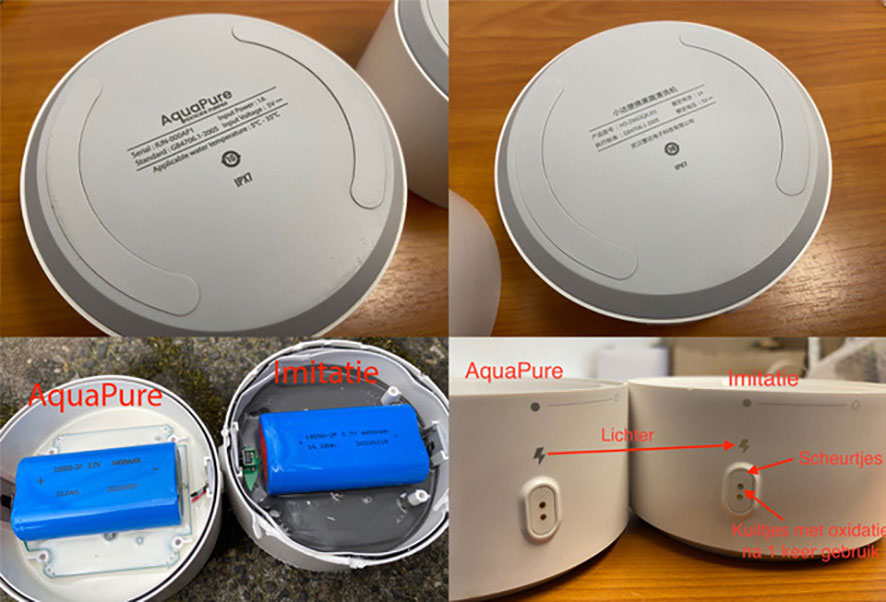
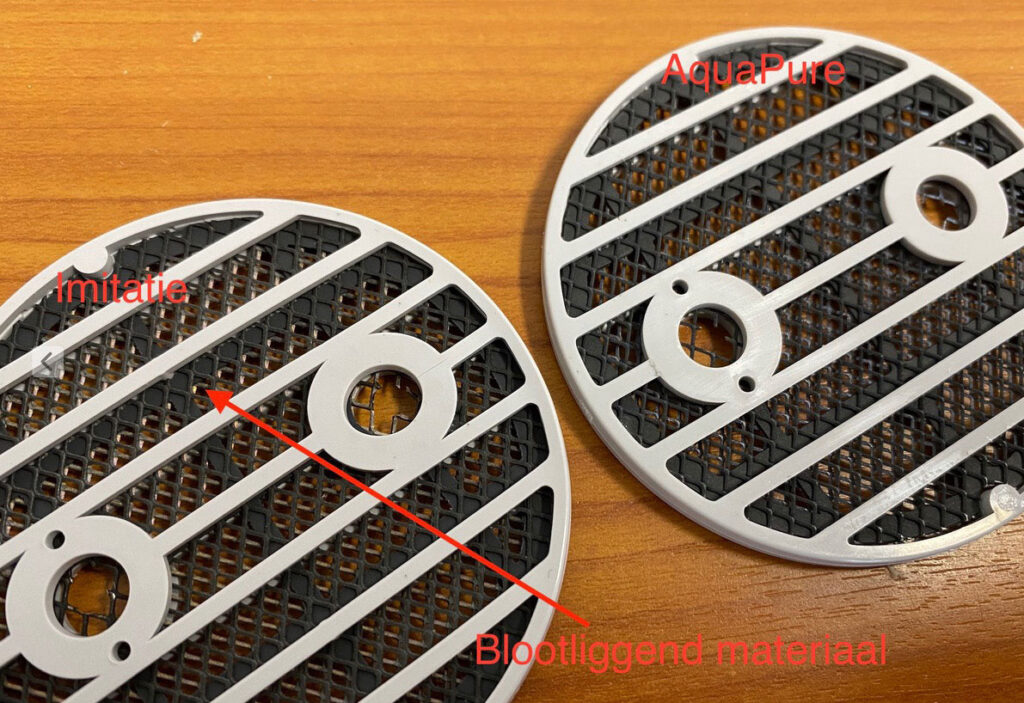
We are regularly asked whether cheap unbranded variants or identical Chinese copies of this product are equally good. We strongly advise against this. Imitation devices can have electrolysis plates made of stainless steel, which can release the harmful and carcinogenic chromium-6 according to studies (8). Therefore, the cathode of the AquaPure is made of titanium and the anode is coated with ruthenium iridium for extra safety. Even though it is difficult to see, imitation models look slightly different and especially inside:

AquaPure vs imitation

It is very important to choose reliability. The AquaPure has independent testresults and that is absolutely not certain with cheap cloning.

For a smaller amount of fruit and vegetables, 1 cycle of 5 minutes is sufficient, followed by another 5 minutes of soaking time. For a larger portion in a larger container, we recommend soaking 2 cycles of 5 minutes and 5 minutes. In principle, you can now use the electrolysis water for a second portion, but AquaPure itself recommends starting with clean water again. This way we can be sure that there is no pesticide contamination from the previous portion. After treating it, it is important to rinse your fruit and vegetables under the tap.

A pinch of salt (blade tip) in a normal container with water is sufficient. Place the salt in the container and then fill it with water. Stir a little if you see undissolved salt. When the salt is properly dissolved in the water, the AquaPure can be used.

Most AquaPure devices are easy to open. However, in some specimens the lid may become stiffly dislodged, especially if it is not screwed straight or if there is moisture or sand between the lid and the device. It is therefore advisable to only open the AquaPure when it is dry. If you do need to open the lid and it is stuck, try using a fork with a plastic handle. Place the end of the fork in the smallest opening of a slot in the lid to remove it.

In principle, you can use the AquaPure in any container, usually a stainless steel sink or a plastic container. However, our preference is for glass. At IKEA there is a 28 cm glass bowl under the name TRYGG sold for just a few euros.

It's like this bowl was made for the AquaPure, because as you can see, it fits exactly on the bottom. It doesn't get cheaper and healthier!

The fact that the AquaPure works has been demonstrated, among other things, in one Dutch labresearch by Eurofins. This study showed that the AquaPure manages to reduce glyphosate in water by about 60% in 1 cycle. A newer study from AquaPure shows that 2 cycles can even remove more than 95% of the glyphosate on the peel. Older studies by AquaPure also show that this device is effective. All tests were carried out in international standard laboratories with strict safety protocols. You can find all results at this manufacturer's web page.

There are also many independent studies on Pubmed that show that electrolysis is able to effectively break down pesticides (1, 2, 3, 4, 5, 6, 7).

You should not treat cut vegetables and (dried) fruit with the AquaPure, not only because the vitamins and minerals leak out, but also because these foods can absorb the electrolysis water. Electrolysis water contains aggressive free radicals that effectively deal with pesticides, but you don't want to get them in. That is why it is important to rinse your fruit and vegetables under the tap after cleaning. Or possibly immerse them in a container with filtered water. Always let your fruit and vegetables dry thoroughly after cleaning before putting them in the refrigerator, otherwise they may become moldy.

We recommend that at least everything from the so-called Dirty Dozen wash with the device. These include strawberries, nectarines, apples, grapes, peppers, cherries, peaches, pears, celery, and tomatoes. For fruit and vegetables in the Clean Fifteen or what is organic, rinsing well under the tap is sufficient. There is no point in cleaning crops with thick skins, such as a banana, orange, kiwi, onions, mangoes, pineapple, melon or avocado. The device is only suitable for whole (leaf) vegetables and fruit. Regular potatoes are better peeled, they do not need to be treated with the AquaPure. We recommend eating organic potatoes with skin. You can treat this, but that is not necessarily necessary if you use it with a brush clean well under the tap in advance. Mushrooms can absorb moisture, which is why it is recommended not to treat it. Mushrooms are in the Clean Fifteen, which means that it is not strictly necessary to wash them thoroughly.

The AquaPure is designed to enjoy it for a long time. To extend the lifespan, it is important to take a number of things into account. Here are 7 important tips for using the AquaPure and a long lifespan of the device:

  1. Use not too much salt, a knife point is enough!
  2. Dry the device thoroughly after use and especially the charging contact points to prevent corrosion on them.
  3. Use not too cold water, better if it's about at room temperature.
  4. You can do better clean a lot of fruit and vegetables at once, then only 1 or 2 vegetables/fruit at a time. This way you save the battery.
  5. Set the AquaPure not on if he not in the water sit.
  6. Never put the device away for a longer period of time with an empty battery, this can be harmful to the battery.
  7. Clean your AquaPure regularly, see also manual.

It's annoying that the AquaPure no longer works. There are a few steps you can try to solve the problem and see if we can get you working on the device again.

  • If it no longer charges properly: Moisten the charging point with (organic) vinegar and let it sit for a while (on a kitchen rail, stick on it and let it sit for half an hour). Then scratch the charging point with a sharp blade or object to remove dirt or rust (corrosion)? Then recharge the AquaPure.
  • Make sure the device is fully charged. To do this, connect the device to the charger and let it charge for at least 5 hours. Make sure the charger is properly connected to both the device and a power source.
  • Once the device is fully charged, you can perform a hard reset. To do this, press and hold the power button for about 10-15 seconds until the device is turned off. Then release the power button and try to turn the device on again.
  • If the device still does not turn on, try connecting it to another power source or using a different charging cable. Sometimes faulty cables or power sources can cause the device to fail to charge properly.

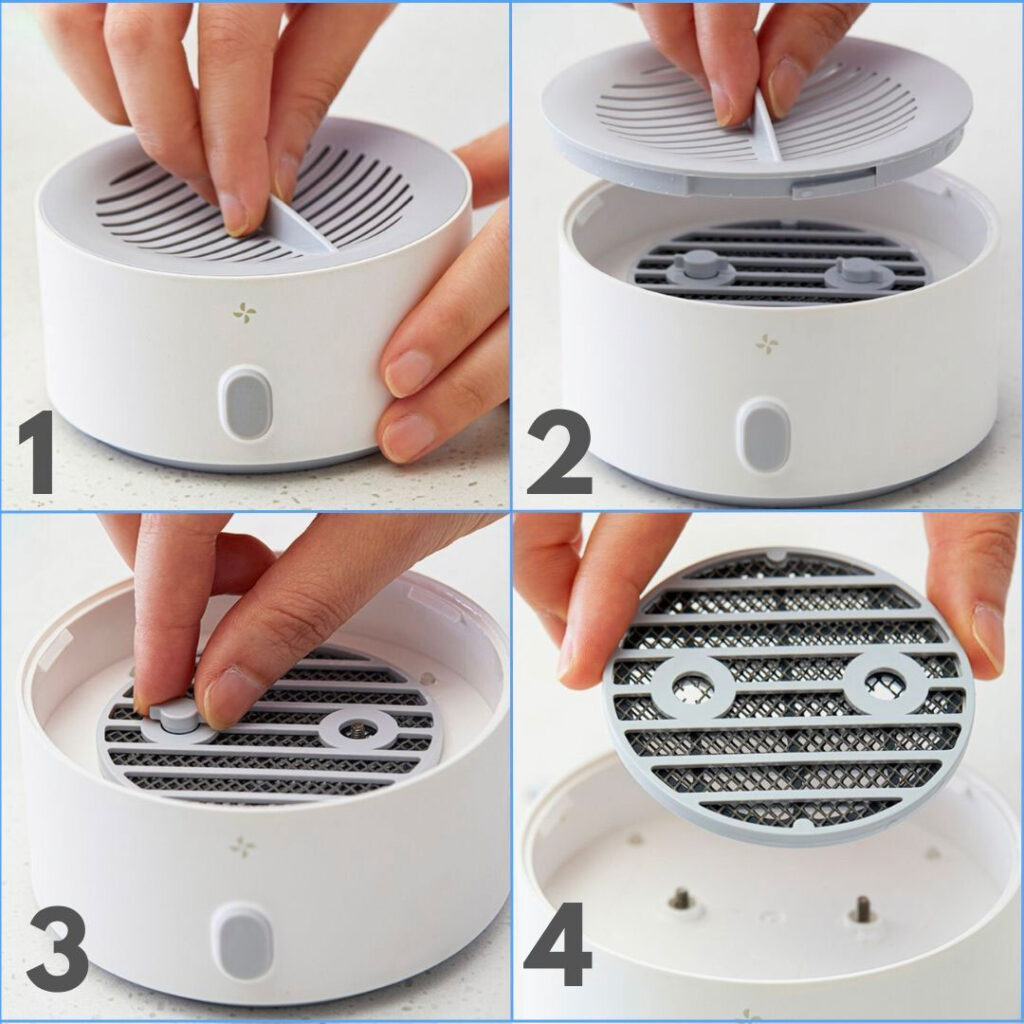
It is also possible that the parts have become slightly loose. To resolve this issue, follow the steps below:

  • Turn open the top of the device and you will see two screw buttons. See the image below.
  • Then twist the two screw buttons to check that they are properly secured.
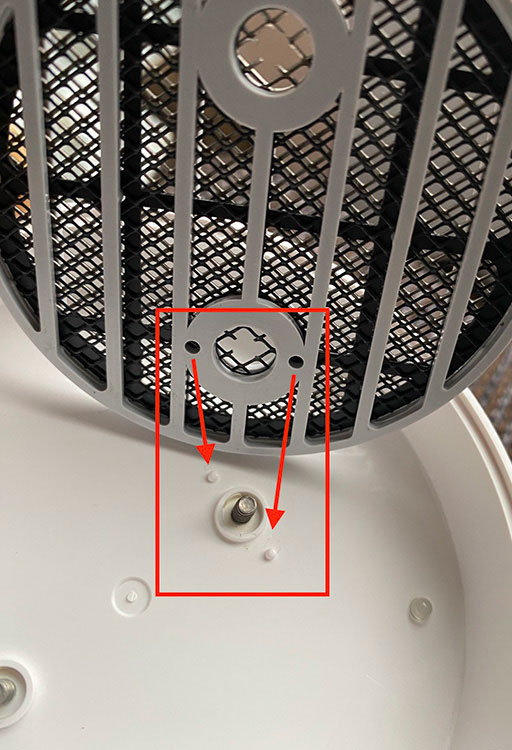
  • Also check whether the grille is properly placed on it (you see 2 dimples on the grille and you see 2 bumps on the device, these can only be connected in one way).
  • Turn the top back on and charge the AquaPure for up to 5 hours.
Troubleshooting AquaPure

If your AquaPure still does not work after performing the specified steps, we would like to receive a short video from your AquaPure device showing the problems you are currently experiencing. We would like to receive a photo of the bottom, the side with the power button and the side of the charging point. You can easily send this to us via WhatsApp and otherwise take contact with us on.

The AquaPure contains stainless steel and ABS plastic. Acrylonitrile butadiene styrene (ABS) is a recycled plastic compound that is itself fully recyclable. ABS is also widely considered to be more durable, longer-lasting and easier to recycle than PVC.

Due to the action of oxygen and water, the contact points can oxidize somewhat over time or suffer from corrosion. This in turn can prevent good contact with the charging cable, causing the device to not charge. So if the AquaPure no longer wants to charge (the charging cable is attached, but it no longer flashes red), corrosion is expected to occur at the contact points and that is the cause of this problem. With the AquaPure it is important that you clean and dry it thoroughly everywhere after use, otherwise you will get corrosion at the contact points (especially there). There is salt in the water and the combination of water and salt and not drying it therefore causes corrosion on the device. You will mainly see this at the contact points and on the grille inside.

So check whether you still see a gold color at the contact points. If there is no gold color to be seen or one, there is corrosion at the contact points. To solve the problem, you now need to do the following. Dab a piece of kitchen roll in the (organic) vinegar and then place (or paste) it on the contact points so that it comes into contact with the vinegar. You leave this for an hour. Then you rinse the device under the tap and carefully scratch the contact points with a potato knife. If these are cleaner again (you can see the gold color again), try charging it again. Normally he does it again.

If this is the solution, you know that you will have to keep the contact points clean and dry from now on. Do not use too much salt, because it can be corrosive on the
contact points work. If it does not provide a solution, please contact us.

The manufacturer rigorously tests numerous different germs and chemicals. This takes some time, as all tests must meet an internationally recognized standard for laboratory tests.

The AquaPure has been proven to remove up to 99.9% of pesticides, bacteria and other harmful substances from your fruits and vegetables. All tests are carried out in international standard laboratories with strict safety protocols. You can find all results at this manufacturer's web page.

After daily use or every use, it is sufficient to briefly rinse your AquaPure under the tap. Make sure you take the entire device with you, especially giving the water some time to flow through the grille. Then make everything dry, but you should definitely not forget the charging point to prevent corrosion formation. After this, you can turn the device upside down to drain the excess water from the inside. Then you can turn the device back over and let it air dry. It is important not to forget this last step, otherwise moisture and condensation will remain and that can shorten the lifespan of your AquaPure.

It is wise to take the AquaPure apart once a month and clean it equally well by removing the lid, wing nuts and the electrolytic plate and cleaning everything equally well with a cloth or brush. You can then reassemble it. When restoring the grille, make sure you do it correctly. You can see this in the dimples and bumps, see below:

Install AquaPure grille

In daily use, the device should be charged every two to three weeks.

Use the magnetic charging cable that you get in your AquaPure box. Keep the cable close to the charging port on the AquaPure from the right angle and you'll find it just clicks in! Simple as that.

Under no circumstances do we recommend that you use the water as a source of clean drinking water after purification.

Sometimes it may be then the device does not show a white mist or after cleaning
not bubbling lightly. Usually the electrolytic plate does not make good contact with the
electrolysis plate because the wing nuts have not been completely straightened. This is sometimes
just try it a few times, but it always works afterwards. After a few times you will see that it
device works as usual again.

So if you don't see any air bubbles (bubbling or fizzing) coming out of your AquaPure, turn off the device and remove it from the water. Turn the top cover counterclockwise to the unlocked position by turning the lever. When the top cap is removed, turn the nuts on the inner electrolyte components clockwise to secure them. This should solve the problem immediately.

If that doesn't work, check whether the grille inside is in the right place. You can see this through the 2 dimples that are on one side of the grille near a hole. These fit exactly on the 2 bumps on the device on one side of the electrode. See also image below:

Install AquaPure grille

If you prefer to purify all your fruits and vegetables at the same time, we recommend doing multiple cleaning cycles.

Our recommendations for optimal cleaning results are as follows

1 to 3 liters of water: One cleaning cycle
4 to 6 liters of water: Two cleaning cycles
7 liters of water or more: Three cleaning cycles

To start a new cycle, simply click the ON button again. For better cleaning efficiency, adding a pinch of salt is recommended.

Yes, the AquaPure is phthalate-free, contains no traces of PVC and is completely BPA/BPS-free.

Absolutely! But make sure you clean your sink thoroughly in advance to achieve the best possible results.

After daily use or every use, it is sufficient to briefly rinse your AquaPure under the tap. Make sure you take the entire device with you, especially giving the water some time to flow through the grille. Then make everything dry, but you should definitely not forget the charging point to prevent corrosion formation. After this, you can turn the device upside down to drain the excess water from the inside. Then you can turn the device back over and let it air dry. It is important not to forget this last step, otherwise moisture and condensation will remain and that can shorten the lifespan of your AquaPure. It is wise to take the AquaPure apart once a month and clean it equally well by removing the lid, wing nuts and the electrolytic plate and cleaning everything equally well with a cloth or brush. You can then reassemble it. When restoring the grille, make sure you do it correctly. You can see this in the dimples and bumps, see below:

Install AquaPure grille

100 x 50 millimetres /3.94 x 1.97 in

The included charging cable has a USB connection. This means that you can charge your AquaPure with any USB plug (not USB-C) you have at home. That of a phone charger, for example!

Yes, the magnetic charging cable is included in the box. It is a bit well hidden, because it is in the double bottom of the box. WATCH OUT! There is no plug, but it is a regular USB plug that everyone has at home these days.

Yes, every AquaPure has a 2-year warranty.

The AquaPure is a one-time investment built to last. There are no expensive filters or other parts that need to be replaced.

Yes, this is available and you can download here.

Frequently asked questions Moon Flow Tea

Moon Flow and Baby Flow Tea

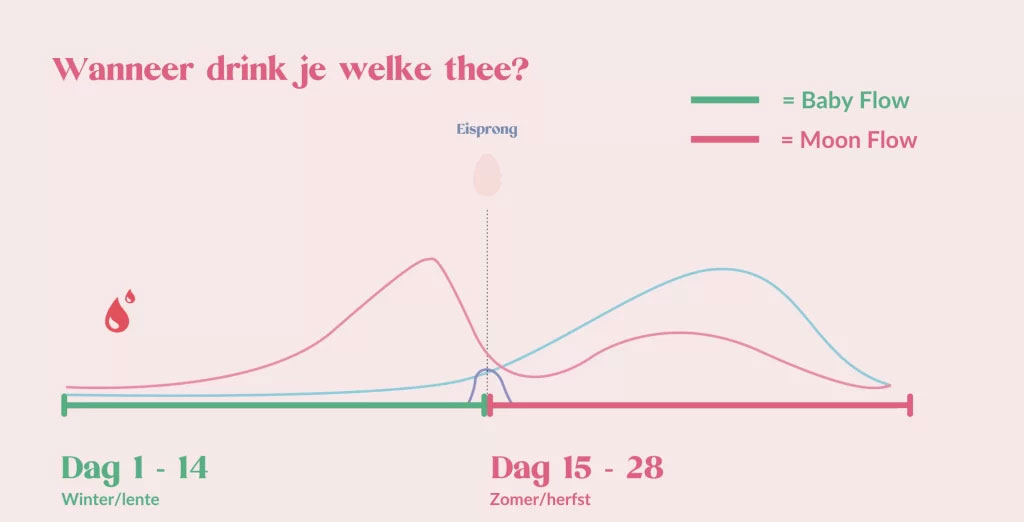
You can start drinking the tea every day of the month. Depending on your complaints and where you are in your cycle, you choose the right tea. If you only drink the Baby Flow, or just the Moon Flow, it doesn't matter when you start. If you drink both, check our web page about use (or below) when it is best to start with which tea.

When do you drink which Moon Flow tea

Note:

 Drink your ankle Moon Flow tea  > drink this, anyway from the 2nd half of your cycle. Do you experience very serious complaints, do you have PCOS or endometriosis? Then drink 1 to 2 cups of tea every day.

 Drink your ankle Baby Flow tea  > then drink it from your period to your ovulation.

Mom Flow tea

Are you pregnant or have you just had a little one? Congratulations! What a special and exciting time is coming for you. Especially for all (expectant) mothers is the Mom Flow tea line developed. Check our web page about use (or below) when it is best to start with which tea.

The advice is to drink at least 1 to 2 cups per day. More is always allowed!

Simple, make sure you have a good stainless steel filter or disposable filters. Then spoon two teaspoons of the tea of your choice into the filter and pour the hot water over it. Of course you can also use a measuring scoop.

Due to the women's cloak and raspberry leaf, it is recommended not to drink it during pregnancy. From week 38 again. Are you pregnant? Then also check the Mom Flow herbal tea for during and after pregnancy. They are safe to drink.

Moon Flow tea
This tea is available in three variants Original, Tropical Summer and the Winter edition. All flavors are soft and subtle, so no dirty herbs! At the Tropical Summer some extra dried fruit was added, which makes it a little sweeter. Herbs such as cinnamon, cardamone and ginger have been added to the Winter edition!

Baby Flow
The taste of the Baby Flow is a bit fresher than that of Moon Flow tea. This is mainly due to the small amount of peppermint. And don't worry, if you are not a fan of peppermint, then you will love this taste. Because it's quite subtle.

The herbs in the tea also have a moisture-drifting effect. This may mean that you have to go to the toilet more often in the beginning. Nothing to worry about!

No, you buy the tea as a loose herbal tea in 75 gram bags. It is therefore useful to purchase a filter for yourself so that you can make the tea. We always recommend a larger filter instead of a tea strainer or egg because tea leaves/herbs often expand a little in the water and need space to give off good taste.

Ingredients Moon Flow Original tea

Woman's cloak, raspberry leaf, orange peel, fennel, nettle, lemon balm, lemongrass, sunflower blossom

Ingredients Moon Flow Tropical Summer tea

Women's cloak, raspberry leaf, orange peel, fennel, nettle, lemon balm, lemongrass, sunflower blossom, pineapple, apple, orange slices, strawberry, safflower leaves, natural aroma, marigold leaves

Ingredients Moon Flow Winter tea

Woman's mantle, raspberry leaf, orange peel, fennel, nettle, lemon balm, lemongrass, sunflower blossom, cinnamon, star anise, ginger, cardamone, cloves

Ingredients Baby Flow tea

Women's cloak, raspberry leaf, lemon balm, nettle, passion flower herb, red clover, ginger, angelica, silver candle, goji resins, peppermint, pomegranate

Ingredients Mom Flow Mom's Delight tea

Nettle, oat straw, lemon balm, ginger, chamomile, rosehip

Ingredients Mom Flow Mom's Nourish tea

Nettle, verveine, lemongrass, raspberry leaf, galega (goat-pane), blessed thistle, hibiscus, rosehip, rose petals, marshmallow leaf

Ingredients Mom Flow Little Tummy Care tea

Honeybush, caraway, anise, fennel, nettle, chamomile

Frequently asked questions MLS washing magnets

In addition to many satisfied customers worldwide, the MLS Washing Magnets have been tested in the very beginning by an independent laboratory. Click below on one of the independent laboratory test reports from one of the largest test companies in the world:

It verifies that the MLS Washing Magnets indeed clean garments and do not damage colors or the tensile strength of your clothing. The technology of the MLS Washing Magnets is also protected by two patents.

The MLS Washing Magnets (washing without detergent) are completely different from anything you've seen or heard before. They don't even like to be called wax balls, because this is such a unique process and technology. This is a twice-patented technology based on harnessing permanent magnetic force to support the washing process. Most “waxball” products are usually small chemical balls in a ventilated, round plastic ball. These chemical balls run out after a number of washes and then need to be refilled. From an environmental point of view, it is still a little better than detergent, but the process remains chemical (similar to detergents) and is thus completely different from the MLS Washing Magnets.

First of all, you should know that your clothes don't wash with soap and you probably never did that in your life. Detergents are not soap. They are petrochemicals derived from crude oil. Water is the universal solvent. Water is what ultimately cleans your clothes whether you use detergents or MLS Washing Magnets. All these products help water to clean better. MLS Washing magnets do it on a chemical-free, fully renewable magnetic basis, while they do it with non-renewable petrochemicals. Magnetic power is one of the most powerful forces of nature on earth. In fact, Earth itself is already a giant magnet with a north and south pole. It's a great source of natural energy. Even the faint magnets on your refrigerator defy gravity without batteries or connected to a power source. MLS Washing Magnets just harness that amazing power and concentrate it in your washing machine at home to affect the water. At the atomic level, everything is influenced by magnetism. All you have to do is try it yourself and see the results with your own eyes. So yes, you can wash without detergent!

This seems like a certainty. Detergents are chemical surfactant petrochemicals derived from crude oil. The basic surfactant building blocks, with one exception, are all derived from crude oil. Unless laundry detergent companies choose to reduce their profit margins to keep detergent costs low, you will pay more and more for laundry detergent, just as you pay more and more to fuel your car. As raw material costs for detergent increase, so do detergent costs for end users. In addition, their plastic containers (which are made from just 25% recycled plastic) are made from petrochemicals and shipping these bulky and heavy bottles costs more due to record high fuel prices. These additional costs are ultimately also paid by the end user.

Optical whiteners are only effective if they remain on the fabric after washing, so they are constantly inhaled and come into contact with and absorbed into your skin. Clothing washed in detergents containing these agents leaves a potentially health-threatening chemical residue on the substance. Skin rashes often attributed to fragrances and dyes are often caused by optical brighteners, so optical brighteners should not be used by individuals with sensitive skin.

Optical brighteners contain chemicals that can be toxic to fish and other animals and plants. Many have also been shown to cause mutations in bacteria (seventhgeneration.com). Furthermore, these chemicals are not easily biodegradable, so pollution remains in wastewater for a long time, negatively affecting water quality and animal and plant life. So in the supermarket you might want to avoid comments such as: “Fleurt colors on! Whiter white!”, because of the worries about what you really get.

That depends on your definition of “schoon” and “helder”. When comparing the use of the MLS Washing Magnets (washing without detergent) with detergent, you should take a few things into account. First, detergents are not soap. They are chemical surfactant petrochemicals derived directly from crude oil and these chemicals are designed so that they are not completely rinsed after washing your clothes. They leave behind so-called “optical brighteners”, which are synthetic chemicals that reflect more light from the clothing to look “brighter” to the eye. We don't believe that adding what are basically chemical mirrors of a garment makes it cleaner. These synthetic chemicals convert UV light wavelengths into visible light, making washed clothes look whiter (although this does not affect the cleanliness of the clothes). They are found to be toxic to fish and cause bacterial mutations. In addition, they can cause allergic reactions when exposed to skin that is later exposed to sunlight.

Since these chemicals have the potential to cause health problems and can cause environmental problems, we believe that leaving them on the clothes seriously compromises their cleanliness. Most people are not even aware that potentially harmful petrochemicals derived from crude oil are constantly on their clothes, potentially causing skin and breathing problems in the wearer. We define clean as free of chemicals, not harmful to the carrier and not toxic to the environment, in addition to being optically acceptable. But only you, the user of the product, can determine that. We feel like there are a lot of people, just like us, who don't want to walk around all day with petrochemicals and optical brighteners in their clothes.

Absolutely. We just recommend that if you have a front loader, you put the MLS Washing Magnets in a pair of socks or pockets before starting the wash. This eliminates any noise that can cause the force of the horizontal axis. And while magnetic force should not be in direct contact with electronics, the magnets are used in the drum and are removed far enough to not affect the electronic controls when used correctly. Just don't rest them on the electronic control panel. Also, the two magents together weigh only a fraction of one wet pair of jeans. So you don't have to worry about significant extra weight.

This is not a problem and does not adversely affect their power to clean. For example, if you want to separate them, you can put them in different pockets of pants (which you wash) to keep them separate.

The most obvious and important fact is that using the MLS Washing Magnets, rather than detergents, prevents petrochemicals from being dumped into our water supply. Our most valuable natural resource (water), which is crucial for human survival, is therefore preserved. Less than 1% of the world's water supply is considered drinkable and maintaining the quality of this irreplaceable resource is of paramount importance for human, animal and vegetation life. In addition, bypassing the flushing cycle can save enormous additional water consumption (20-40 liters of water per wash), electricity (mainly from burning coal and oil, which are major polluters), natural gas (for heating the extra water) and sewerage. It may also potentially help to reduce the causes of global warming – as such a huge amount of detergents are made and used worldwide, significant resources (fossil fuels) are used in their production and supply.

Many benefits. The most important thing is that if you or your family suffer from detergent-related complaints, such as skin problems and/or breathing problems, you owe it to your health to switch to a non-chemical alternative product.

From a financial point of view, you should be able to save hundreds of euros a year on detergents. This can be even more if you skip the rinse cycle as it is no longer needed (which would also save 20 to 40 liters of water per wash, good for the environment).

You save time, reduce your effort with your laundry and avoid dragging black bottles or packs of detergents from the store every time. Your wardrobe (which is a significant investment) can last much longer due to the reduction of harsh chemicals. It makes your home “greener” and also more child-friendly by reducing the amount of toxins in your home.

It can have a huge impact on the environment by reducing fewer chemical agents and our dependence on foreign petrochemicals (Yes, detergents are petrochemicals derived from crude oil).

Etc. etc.

In general, warmer water always provides the cleanest clothing, whether you use the MLS Washing Magnets or detergent. Think about when you wash the dishes in the sink. The cold water will clean stuck food, but the hot water will remove the food faster and more efficiently with less water consumption. It's the same in your washing machine.

However, different garments and materials may require you to use lower temperatures and you can continue to do so. Many customers report excellent results by using only cold water with the MLS Washing Magnets. For the reason outlined above, we are still happy to recommend hot water to users, but you will ultimately have the freedom to test the product in different ways and choose the option that best suits your personal situation.

The use of cold water is clearly better for the environment (less energy consumption), but remember that the amazing health and environmental benefits of preventing petrochemical detergents from being in the water supply and on our skin are of much greater importance. Yet the MLS Washing Magnets with cold water leave almost no ecological footprint.

The MLS Washing Magnets (washing without detergent) were designed and developed to serve for decades and save thousands of euros, as you no longer have to buy detergents. During these years, you will also prevent thousands of pounds of chemicals from entering our water supply and your clothes from being infused with perfume. This also has a positive effect on the health of you and your family.

No odor is added when using the MLS Washing Magnets. The truth is, clean clothes don't smell like anything. They don't smell like perfume. And most people exaggerate significantly with these smells. They use detergents, stain removers and bleach with perfumes in their washing machine. They then use fabric softeners and/or dry sheets in the dryer that add even more perfumes. They also wash their bodies with perfumed soap and shampoo and dry them with their perfumed towel (after sleeping in perfumed sheets and pillowcases all night). Then they apply perfumed deodorant and spray their favorite perfume. These are just too many chemicals on the body and sometimes the body rebels with a rash, breathing problems or illness.

If you absolutely cannot live without a scent on your clothes, just use one fragrant tumble dryer cloth. There's simply no reason to stack all the other scented chemicals on your clothes. And you should know that most of these are very unhealthy for your skin and respiratory tract, so the less you use, the better you are at it. Some complaints such as red eyes, rash and runny noses are not because of allergies, but because of the perfume and petrochemicals left in your clothing.

Yes. Frankly, nothing becomes as white as chlorine bleach, but few chemicals are more toxic to the environment and health. Bleach is very extreme and also harmful to your clothes. That said, if you don't mind these trade-offs, you can still use diluted bleach with the MLS Washing Magnets (wash without detergent) if desired. A good alternative to chlorine bleach is oxygen bleach. Borax is also an excellent natural laundry booster. Some MLS Washing Magnets users add baking soda or white vinegar to their laundry.

Again, the MLS Washing Magnets are only an alternative to detergent. Detergent is not used to kill microorganisms and neither are MLS Washing Magnets. The cleaning process itself flushes away most bacteria. However, hot water will kill most microorganisms in the water and a little bleach will do the same (although bleach works best at high temperatures, so that's double).

 * An extremely effective natural alternative: Numerous studies show that a pure 5 percent solution of vinegar (as you can buy in the supermarket) kills 99% of bacteria, 82% of fungi and 80% of germs (viruses).

The MLS Washing Magnets are only an alternative to detergent. As with detergent use, individual products used for other functions should be used separately. So consider stain treatments and bleaching agents. These are separate from the MLS Washing Magnets, just as they are separate from detergent.

The MLS Washing Magnets (washing without detergent) absolutely do not need to stick to the water drum “to work properly. There are a variety of washing machines, from front loaders to top loaders, and indoor wash drums ranging from plastic, iron and stainless steel. The material from which the water drum is made does not matter, the MLS Washing Magnets (washing without detergent) work in all. The magnets can stick “together during the washing process. This is perfectly normal and will not reduce their effectiveness, because they still emit the same level of magnetic force, whether they are attracted to each other or not. The washing magnets need only be submerged and/or close to the water for maximum effectiveness.

Frequently asked questions Mayu Swirl

Yes! We recommend this: Natural Care Company Electrolytes.

Enjoy the beauty of uniqueness! Each MAYU Swirl base is handmade, making it as unique as a snowflake. This individuality ensures that no two bases are identical, giving you a unique one that adds a touch of exclusive charm to your Swirl experience.

To properly maintain the carafe and impeller (white fan) of your MAYU Swirl, you must also clean them daily (at least every other day) with dishwashing liquid to prevent the accumulation of limescale on the impeller (the white disc in the carafe). This is especially important if you use tap water or mineral water, or if you add something to your water while swirling (minerals, fruit or other ingredients). If you swirl wine or juice, you should clean the decanter and impeller after each use.

The MAYU Swirl carafe is waterproof and dishwasher safe. If you see limescale by hand or in the dishwasher after regular use, don't panic! Add a teaspoon of citric acid or vinegar to the decanter and fill it with warm water. Place the carafe on your MAYU Swirl base and let it rotate until there is no more limescale on the walls of the carafe. Empty the carafe and wash it.

We do not recommend putting the impeller in the dishwasher. Wash these by hand instead. To remove stains from the impeller, add a cup of water and a tablespoon of bleach (or chlorine-free bleach). Soak overnight, then rinse the bleach residue and wash thoroughly with soap and water.

If you have a carafe with the impeller attached to the bottom, you can use something like this: https://www.amazon.nl/-/en/Flexible-gripper-reacher-removal-bendable/dp/B07Y75N3DW?th=1 to remove the impeller, clean it and place it back in the carafe.

If your brand new MAYU Swirl doesn't create that enchanting swirl (vortex), don't worry! You are now the proud owner of the latest version, with a new carafe design. Perhaps you haven't forgotten anything. Inside you will find a small white disc – de impeller (white fan) – carefully wrapped in tissue paper and placed on the pouring spout.

Unleashing the magic is child's play! Remove the tissue paper, remove the pouring spout from the decanter, gently slide the fan into the water in your decanter, put the pouring spout back on and voilà! Let the swirling begin and enjoy the enchanting spectacle just as you envisioned it. Prepare for the magic!

No, if the glass of the carafe breaks during use, this is due to your own actions. We know accidents happen. That is why we offer the carafe separately, so that you do not have to buy a completely new MAYU Swirl. You'll find him here: /products/mayu-swirl-carafe/.

 The MAYU Swirl comes with a 2-year legal warranty. This covers all defects resulting from manufacturing defects. Moreover, you benefit from quality assurance, which guarantees a sustainable and reliable product.

Thanks for purchasing the MAYU Swirl! This innovative device transforms your drinking water into revitalized, oxygen-rich water. Follow these steps to optimally install and use your MAYU Swirl:

Contents of the box:

  • Porcelain base
  • USB Charging Cable
  • USB Adapter
  • Glass carafe made of borosilicate glass
  • Stainless steel spout
  • White fan (impeller)

First steps:

  1. Prepare the base for:
    • Connect the USB cable to the adapter and plug it into a wall socket.
    • Insert the other end of the cable into the USB-C port on the back of the porcelain base.
    • The charging indicator light lights up orange and turns white once charging is complete. A fully charged Swirl can be used wirelessly for up to 6 hours.
  2. Prepare the carafe for:
    • Clean the glass decanter thoroughly with warm water and dishwashing liquid and then rinse it thoroughly.
    • Remove the white fan from its protective paper and carefully slide it into the carafe.
    • Fill the carafe with a maximum of 1.5 liters of drinking water.
  3. Commissioning:
    • Place the filled carafe in the center of the porcelain base.
    • Gently touch the touch sensor at the bottom to start the swirl.
    • Let the water rotate for at least 7 minutes for maximum oxygen uptake and to fully structure it.

Notes:

  • Make sure the impeller (white fan) is freely located at the bottom of the carafe to ensure optimal eddy formation.
  • If desired, you can go after swirl minerals add to the water. To do this, please refer to the dosage recommendations on the packaging of the minerals.
  • Clean the carafe regularly to maintain water quality.

For a visual guide to the first steps and uses of your MAYU Swirl, we recommend our instructional videos on.

Please feel free contact please contact us if you have any questions.  

Enjoy your refreshing water and stay well hydrated!

Borosilicate glass is considered the best material for a decanter, as it is highly durable, temperature resistant and non-reactive with water. This makes it the ideal choice for safe storage and serving of water, maintaining its natural taste and purity.

Yes, a borosilicate glass carafe is perfect for both hot and cold water. The glass is designed to withstand extreme temperature fluctuations, so you can safely use it for both hot tea and cold drinks without worrying about it breaking.

A carafe of Class A borosilicate glass consists of the highest quality glass, which is resistant to chemical reactions and the release of harmful substances. This means that no harmful substance ends up in your water. This way your water remains pure and uncontaminated.

Unlike traditional glass decanters, a borosilicate glass decanter is extremely resistant to temperature fluctuations and chemical reactions. This means that it can withstand temperature fluctuations without cracking and the taste or quality of the water in it is not affected.

A handmade decanter, carefully crafted, offers superior quality and aesthetics compared to mass-produced items. The MAYU Swirl carafe, made from 100% borosilicate glass, ensures that your water is stored in a safe, chemical-free environment, which benefits both taste and health benefits.

A borosilicate glass carafe is a high-quality option for storing and serving water. Thanks to its heat resistance and durability, it is the ideal choice to maintain the freshness and purity of the water while preventing the release of chemicals.

De waardering van www.alternatievemiddelen.nl bij WebwinkelKeur Reviews is 9,9/10 gebaseerd op 1898 reviews.