
Hey, welcome to Alternatievemiddelen.nl by Tom & Melanie

Fast delivery

Free delivery on orders of €75 or more (NL) and €100 or more (in BE and DE)

Collection available

Home

>>

The Library

>>

Frequently Asked Questions: AquaPure Pesticide Cleaner

Frequently Asked Questions: AquaPure Pesticide Cleaner

Vind hier de antwoorden op veelgestelde vragen van de AquaPure producten. Deze worden van tijd tot tijd ook aangevuld. Alle antwoorden zijn gebaseerd alle informatie uit de kennisbank van de fabrikant, daarnaast aangevuld met onze eigen ervaringen.

Usage

Some types of fruit and vegetables tend to float, which prevents the electrolysed water from working effectively. You can easily solve this by placing a plate or chopping board on top of your fruit and vegetables whilst the AquaPure is switched on. This keeps the fruit and vegetables submerged, ensuring optimal cleaning. And your chopping board will be thoroughly disinfected too!

The mechanism of electrolysis has been extensively researched and has been deemed very safe in many studies (1, 2, 3, 4). It is important, however, to rinse your fruit and vegetables briefly under the tap using a colander after cleaning, to remove any remaining traces of the electrolysed water. You must not drink the (residual) water from the electrolysis process. Some people are put off by the smell of chlorine (bleach), but this is perfectly normal.

It is indeed true that pesticides can enter the fruit through the skin
end up in the food, but virtually all studies agree that this is usually only a very small amount. The real problem is mainly the peel. There are more than 1,000 pesticides on the market, each of which works differently. We cannot lump all pesticides together. In the past, we did have neonicotinoids, which are known to spread throughout the entire plant (and to be lethal to bees), but their use has been severely restricted in the EU. With virtually all of them, it seems that the problems are mainly confined to the skin. Incidentally, the thicker the skin, the better.

For a smaller quantity of fruit and vegetables, one 5-minute cycle, followed by a further 5 minutes of soaking time, is sufficient. For a larger portion in a larger container, we recommend 2 cycles of 5 minutes each, followed by 5 minutes of soaking. In principle, you could now use the electrolysed water for a second portion, but AquaPure itself recommends starting again with fresh water. This way, we can be sure that there is no contamination with pesticides from the previous batch. After treatment, it is important to give your fruit and vegetables a quick rinse under the tap.

A pinch (a knife-tip) of salt in a standard container of water is sufficient. Put the salt into the container, then fill it with water. Give it a quick stir if you see any undissolved salt. Once the salt has dissolved properly in the water, the AquaPure is ready for use.

In principle, you can use the AquaPure in any container; this is usually a stainless steel sink or a plastic bowl. However, we prefer glass. IKEA sells a 28 cm glass bowl under the name TRYGG sold for just a few euros.

It’s as if this bowl were made for the AquaPure, because, as you can see, it fits perfectly on the base. It doesn’t get any cheaper or healthier than this!

You must not treat chopped vegetables and (dried) fruit with the AquaPure, not only because the vitamins and minerals will leach out, but also because these foods can absorb the electrolysed water. Electrolysed water contains aggressive free radicals that effectively break down pesticides, but which you do not want to ingest. That is why it is important to rinse your fruit and vegetables under the tap for a moment after cleaning them. Alternatively, you could also soak them briefly in a bowl of filtered water. Always allow your fruit and vegetables to dry thoroughly after washing before putting them in the fridge, otherwise they may go mouldy.

We recommend that, at the very least, you include everything from the so-called Dirty Dozen wash in the appliance. These include strawberries, nectarines, apples, grapes, peppers, cherries, peaches, pears, celery and tomatoes. For fruit and vegetables in the Clean Fifteen Or, for organic produce, a thorough rinse under the tap is sufficient. There is no point in cleaning produce with a thick skin, such as bananas, oranges, kiwis, onions, mangoes, pineapples, melons or avocados. The appliance is only suitable for whole (leafy) vegetables and fruit. It is better to peel conventional potatoes; they do not need to be treated with the AquaPure. We recommend eating organic potatoes with their skins on. You can treat these, but it is not strictly necessary if you eat them with a brush Wash them thoroughly under the tap beforehand. Mushrooms can absorb moisture, so it is advisable not to treat them. Incidentally, mushrooms are on the ‘Clean Fifteen’ list, so it is not strictly necessary to wash them thoroughly.

The AquaPure is designed to give you many years of enjoyment. To extend its lifespan, it is important to bear a few things in mind. Here are 7 important tips for using the AquaPure and ensuring the appliance has a long lifespan:

  1. Usage not too much salt, just a pinch is enough!
  2. Dry the appliance thoroughly after use and, in particular, the charging contacts, to prevent corrosion on them.
  3. Usage water that isn’t too cold, it’s best if it’s at about room temperature.
  4. You’d be better off cleaning a large amount of fruit and vegetables in one go, then just 1 or 2 pieces of fruit or veg at a time. That way, you’ll save the battery.
  5. Turn on the AquaPure not to if he not in the water is.
  6. Never store the appliance away for long periods either with a flat battery, as this may damage the battery.
  7. Clean your AquaPure regularly; see also user guide.

It’s a shame that the AquaPure isn’t working any more. There are a few steps you can try to sort out the problem and see if we can get the appliance working again.

  • If it no longer charges properly: Moisten the charging point with (organic) vinegar and leave it to soak in for a while (on a kitchen towel, stick it on and leave it for half an hour). Then scrape the charging point with a sharp knife or similar object to remove any dirt or rust (corrosion). Then recharge the AquaPure.
  • Make sure the device is fully charged. To do this, connect the device to the charger and leave it to charge for at least 5 hours. Ensure that the charger is properly connected to both the device and a power source.
  • Once the device is fully charged, you can perform a hard reset. To do this, press and hold the power button for about 10–15 seconds until the device switches off. Then release the power button and try switching the device back on.
  • If the device still won’t switch on, try connecting it to a different power source or use a different charging cable. Sometimes, faulty cables or power sources can prevent the device from charging properly.

It is also possible that the parts have come slightly loose. To resolve this issue, follow the steps below:

  • Unscrew the top of the appliance and you will see two screw knobs. See the image below.
  • Next, turn the two screw knobs to check that they are securely fastened.
  • Also check that the grill is fitted correctly (you’ll see two indentations on the grill and two protrusions on the appliance; they can only fit together in one way).
  • Screw the top back on and charge the AquaPure for up to 5 hours.
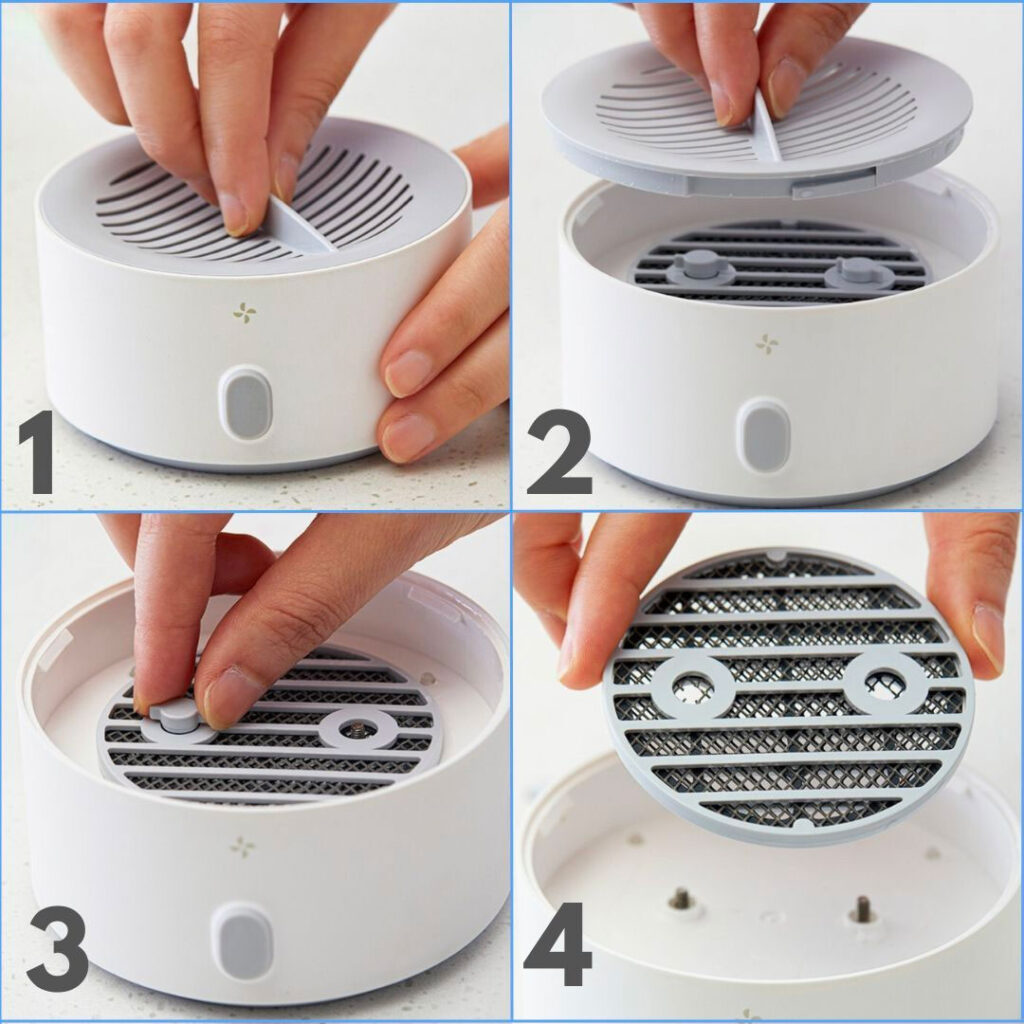
AquaPure Troubleshooting

If your AquaPure is still not working after following the steps outlined, we would like to receive a short video of your AquaPure unit showing the problems you are currently experiencing. We would also appreciate a photo of the underside, the side with the on/off button and the side with the charging port. You can easily send these to us via WhatsApp or else take contact Join us.

Over time, the contact points may become slightly oxidised or corroded due to the effects of oxygen and water. This, in turn, can prevent a proper connection from being established with the charging cable, meaning the device will not charge. So, if the AquaPure no longer charges (the charging cable is connected, but it no longer flashes red), it is likely that there is corrosion on the contact points, which is the cause of this problem. With the AquaPure, it’s important to make sure you clean and dry it thoroughly all over after use, otherwise corrosion will form on the contact points (particularly there). This is because there is salt in the water, and the combination of water and salt – coupled with the device not being dried properly – causes corrosion on the unit. You’ll notice this mainly on the contact points and on the small grille inside.

So, just check whether you can still see a golden colour on the contact points. If there is no golden colour visible, or if it’s missing from just one of them, then there is corrosion on the contact points. To sort out the problem, you need to do the following. Dip a piece of kitchen roll in (organic) vinegar and then place (or stick) it onto the contact points so that they come into contact with the vinegar. Leave it to soak for an hour. Then rinse the device under the tap and gently scrape the contact points clean with a potato peeler. Once they’re clean again (you’ll see the golden colour reappear), try charging it once more. It should then work again as normal.

If this turns out to be the solution, then you’ll know that you need to keep the contact points clean and dry from now on. Also, don’t use too much salt, as this can be corrosive to the
The contact points are working. If this does not resolve the issue, please get in touch with us.

If used daily, the device should be charged every two to three weeks.

Materials

We are regularly asked whether cheap, unbranded versions or identical Chinese copies of this product are just as good. We strongly advise against this. Counterfeit devices may have stainless steel electrolysis plates, which, according to studies, can release harmful and carcinogenic chromium-6 (8). That is why the AquaPure’s cathode is made of titanium and the anode is coated with ruthenium-iridium for added safety. Although it is difficult to tell, imitation models look slightly different, particularly on the inside:
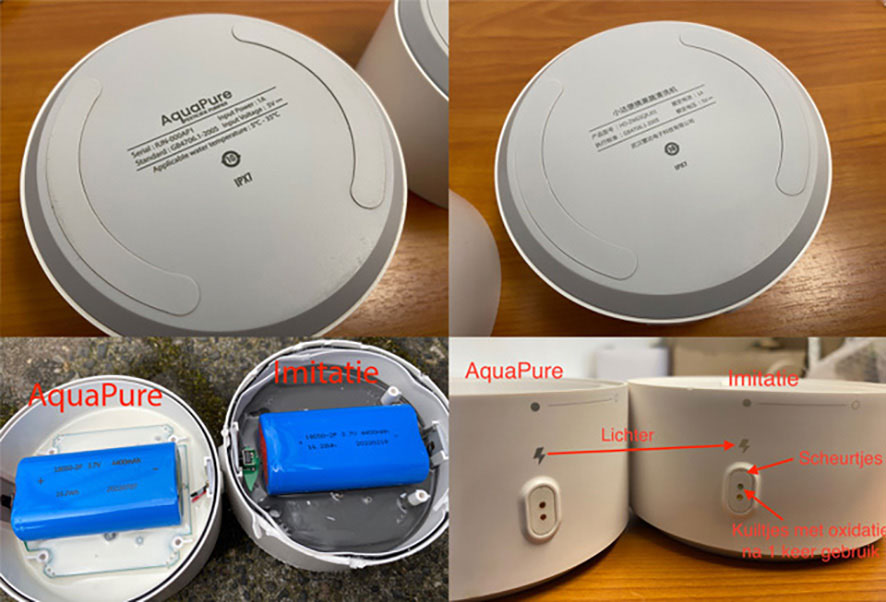
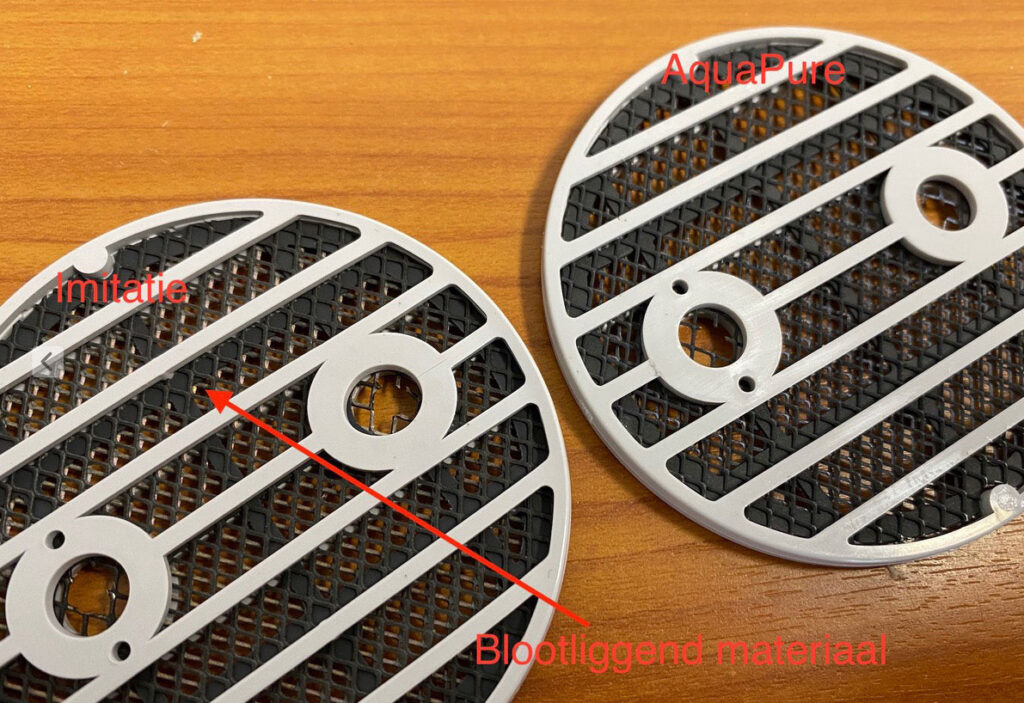
AquaPure vs imitation

It is very important to choose reliability. The AquaPure has independent test results and that is by no means certain with cheap clones.

The AquaPure is made from stainless steel and ABS plastic. Acrylonitrile butadiene styrene (ABS) is a recycled plastic compound which is itself fully recyclable. ABS is also generally regarded as more sustainable, longer-lasting and easier to recycle than PVC.

Yes, the AquaPure is phthalate-free, contains no traces of PVC and is completely BPA/BPS-free.

100 x 50 millimetres / 3.94 x 1.97 inches

The charging cable supplied has a USB connector. This means you can charge your AquaPure using any USB plug (not USB-C) you have at home. A phone charger, for example!

Yes, the magnetic charging cable is included in the box. It’s tucked away quite well, though, as it’s in the false bottom of the box. PLEASE NOTE! There’s no plug included, but it’s just a standard USB plug, which everyone tends to have lying around at home these days.

Cleaning, maintenance and storage

Most AquaPure units are easy to open. However, with some models, the lid can be difficult to remove, particularly if it has not been screwed on properly or if there is moisture or sand between the lid and the unit. It is therefore advisable to only open the AquaPure when it is dry. If you do need to open the lid and it is stuck, try using a fork with a plastic handle. Insert the tines of the fork into the smallest opening of a slot in the lid to remove it.

After daily use, or after each use, simply give your AquaPure a quick rinse under the tap. Make sure you rinse the entire unit, taking particular care to allow the water a moment to flow through the mesh filter. Then dry everything off, making sure not to forget the charging port to prevent corrosion. After that, you can turn the device upside down for a moment to let any excess water drain out from inside. You can then turn the device the right way up again and leave it to air dry. It’s important not to forget this final step, otherwise moisture and condensation will remain inside, which could shorten the lifespan of your AquaPure.

It is advisable to take the AquaPure apart once a month and give it a thorough clean by removing the lid, wing nuts and the electrolytic plate, and cleaning everything thoroughly with a cloth or small brush. You can then put it back together again. When refitting the grille, make sure you do so correctly. You can tell by the indentations and raised areas, as shown below:
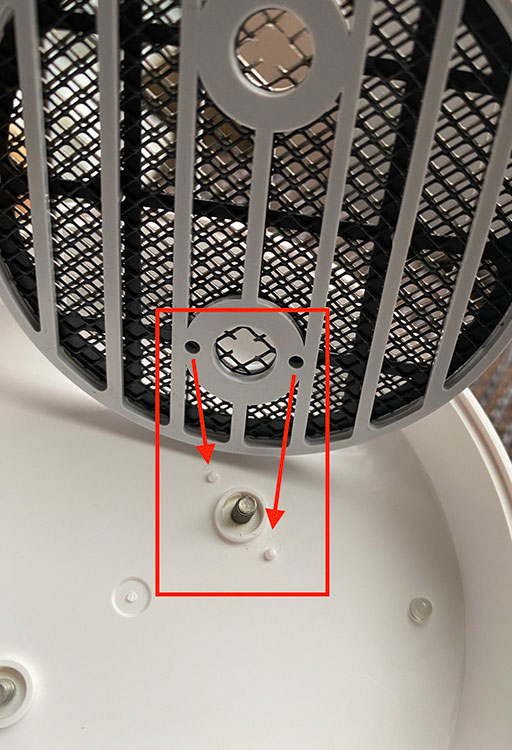
Fitting the AquaPure grille

If you prefer to wash all your fruit and vegetables at the same time, we recommend running several wash cycles.

Our recommendations for optimal cleaning results are as follows:

1 to 3 litres of water: One cleaning cycle
4 to 6 litres of water: Two cleaning cycles
7 litres of water or more: Three cleaning cycles

To start a new cycle, simply click the ON button again. To improve cleaning efficiency, we recommend adding a pinch of salt.

After daily use, or after each use, simply give your AquaPure a quick rinse under the tap. Make sure you rinse the entire unit, taking particular care to allow the water a moment to flow through the mesh filter. Then dry everything off, making sure not to forget the charging port to prevent corrosion. After that, you can turn the device upside down for a moment to let any excess water drain out from inside. You can then turn the device the right way up again and leave it to air dry. It is important not to forget this final step, otherwise moisture and condensation will remain, which can shorten the lifespan of your AquaPure. It is advisable to take the AquaPure apart once a month and give it a thorough clean by removing the lid, wing nuts and the electrolytic plate, and cleaning everything thoroughly with a cloth or small brush. You can then put it back together again. When refitting the grille, make sure you do so correctly. You can tell by the indentations and raised areas, as shown below:

Fitting the AquaPure grille

Warranty

Yes, every AquaPure comes with a 2-year warranty.

Manuals

Yes, this one is available and you can Download here.

Testresultaten

The effectiveness of AquaPure has been demonstrated, amongst other things, in a Dutch laboratory research by Eurofins. This study showed that the AquaPure is able to reduce glyphosate in water by around 60% in a single cycle. A more recent study by AquaPure shows that two cycles can remove more than 95% of the glyphosate from the skin. Older studies by AquaPure also demonstrate that this device is effective. All tests were carried out in international standard laboratories with strict safety protocols. You can find all the results at this webpage from the manufacturer.

In addition, there are also many independent studies available on PubMed which show that electrolysis is capable of effectively breaking down pesticides (1, 2, 3, 4, 5, 6, 7).

The manufacturer rigorously tests a wide range of different pathogens and chemicals. This takes some time, as all tests must comply with an internationally recognised standard for laboratory testing.

It has been proven that the AquaPure removes up to 99.9% of pesticides, bacteria and other harmful substances from your fruit and vegetables. All tests are carried out in laboratories that meet international standards and adhere to strict safety protocols. You can find all the results at this webpage from the manufacturer.

Vervangen

The AquaPure is a one-off investment designed to last. There are no expensive filters or other parts that need replacing.

www.alternatievemiddelen.nl’s rating at WebwinkelKeur Reviews is 4.9/5 based on 1,899 reviews.